

Blog
Why Brass Necklace Casting Is Not the Right Fit for Fine Jewelry Manufacturing
Manufacturer Rings is a key topic for jewelry brands evaluating OEM manufacturing and custom production options.
Brass necklace casting attracts attention from fashion brands and costume jewelry lines. However, for businesses targeting fine jewelry buyers, brass presents serious limitations. This article explains why brass casting serves a narrow market segment and why most serious jewelry brands choose gold or platinum instead.
Fashion jewelry brands often search for custom brass necklace casting manufacturers to test new designs at lower costs. Yet the properties of brass — its base metal composition, skin sensitivity risks, and short lifespan — make it unsuitable for engagement rings, wedding bands, or fine jewelry collections. Understanding these distinctions helps brand owners make informed manufacturing decisions.
Why Brass Necklace Casting Is Trending
Moreover, brass jewelry appears frequently in fast-fashion retail and influencer-driven accessory lines. Its affordability drives demand among younger consumers who prioritize trend experimentation over longevity.
- Brass costs a fraction of gold or platinum, enabling low retail price points
- Fashion-forward designs change quickly, and brass allows rapid style turnover
- Social media platforms showcase brass pieces as budget-friendly layering options
- Emerging designers use brass to prototype ideas before committing to precious metals
However, market data suggests a shift. Consumers increasingly invest in fewer, higher-quality pieces rather than disposable accessories. The engagement ring sector, for example, shows buyers prioritizing lasting value over short-term trends.
What Defines Brass Necklace Casting
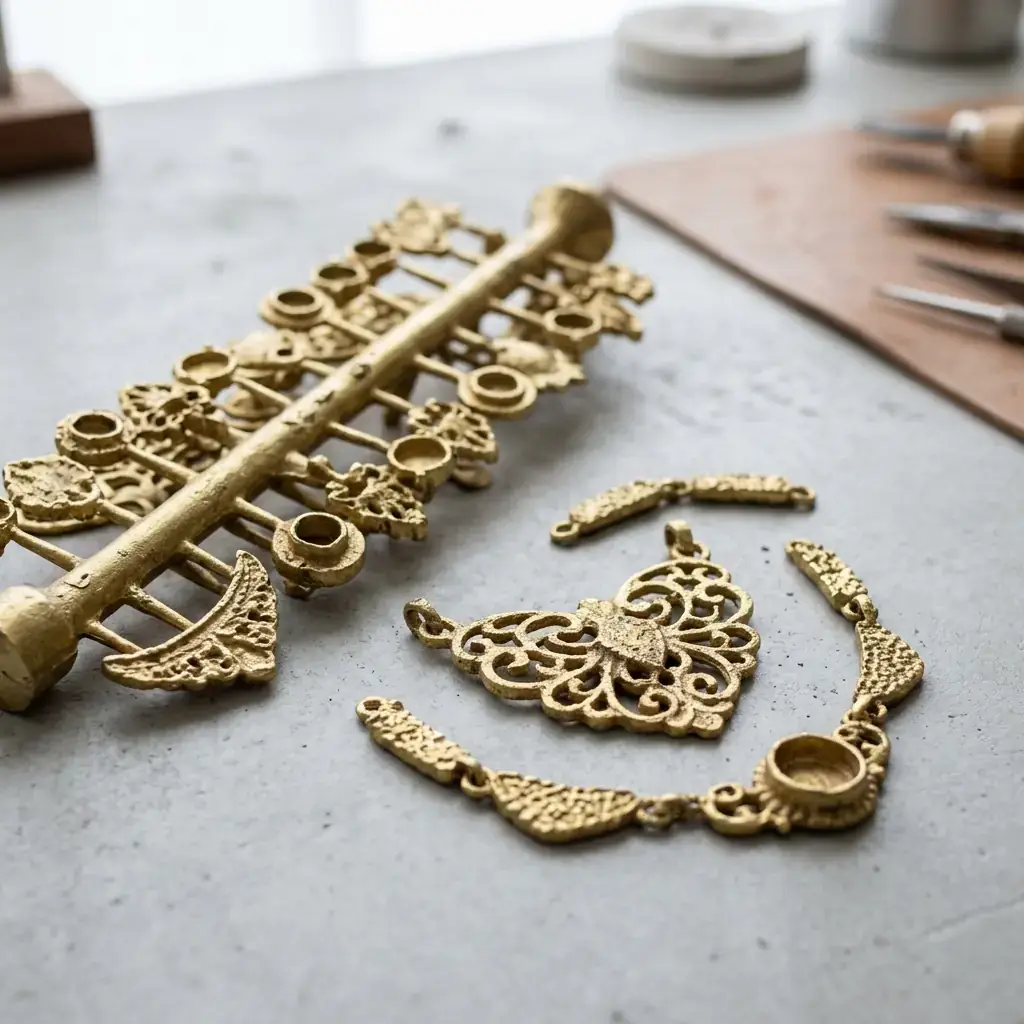
Brass is a copper-zinc alloy known for its gold-like appearance when polished. Casting brass involves creating molds and pouring molten alloy into cavities to form necklace components.
In addition, key characteristics of brass casting:
- Lower melting point than gold or platinum, simplifying the casting process
- Natural yellow tone that mimics gold at a fraction of the cost
- Prone to tarnishing and oxidation when exposed to moisture and air
- Requires protective coating to delay discoloration
- Limited durability for everyday wear
For example, for fashion accessories, these traits work acceptably. For fine jewelry, they create fundamental problems.
Best Approaches for Fashion Jewelry Manufacturing
Target Markets for Brass Casting
Also, brass necklace casting serves specific market segments. Costume jewelry brands, boutique fashion labels, and trend-driven accessory lines benefit from brass production. These businesses prioritize low production costs and quick market entry over material longevity.
Material Limitations
Brass causes skin irritation for many wearers due to copper content and nickel traces. Prolonged wear leads to green skin discoloration and potential allergic reactions. Consequently, brass pieces rarely suit sensitive skin or daily wear.
Positioning Brass in a Collection
Some brands incorporate brass for statement pieces designed for occasional wear. In this context, brass works as an experimental material. However, brands must clearly communicate the product category to avoid customer confusion about quality expectations.
Brass vs. Gold vs. Platinum for Necklaces
| Feature | Brass Necklace | Gold Necklace | Platinum Necklace |
|---|---|---|---|
| Skin compatibility | Can irritate sensitive skin | Generally hypoallergenic | Hypoallergenic |
| Appearance over time | Tarnishes and dulls | Maintains rich color | Develops subtle patina |
| Wear durability | Low, bends and scratches | High with proper care | Very high |
| Resale value | Minimal | Strong | Strong |
| Perceived value | Fashion accessory | Fine jewelry | Luxury investment |
Why Custom CAD Design Matters
CAD design transforms jewelry concepts into precise digital models before casting begins. For fine jewelry, CAD ensures accurate stone placement, proper proportions, and structural integrity. At Alpha Jewelry, clients review CAD renderings and approve designs before production starts, which minimizes costly revisions.
Custom fine jewelry requires this digital precision because precious metals and gemstones demand exact specifications. CAD also enables one-piece custom making, allowing clients to create unique pieces without mass production minimums. This approach suits engagement rings and heirloom-quality necklaces where every detail matters.
FAQ
Is brass necklace casting suitable for fine jewelry brands?
No. Fine jewelry brands should use gold or platinum because brass tarnishes, irritates skin, and lacks durability for long-term wear.
What is the difference between brass casting and gold casting?
Brass casting uses a copper-zinc alloy with a lower melting point, while gold casting uses precious metal alloys that require higher temperatures and more precise control.
How long does a brass necklace last?
With occasional wear and careful storage, brass necklaces last one to two years. Regular wear accelerates tarnishing and surface wear.
Can brass necklaces be worn by people with sensitive skin?
Most people with sensitive skin experience irritation from brass because of copper content and possible nickel traces. Gold and platinum offer safer alternatives.
Why do some brands still choose brass casting manufacturers?
Fashion brands choose brass for low-cost trend pieces and prototyping. These applications do not require the longevity or prestige of fine jewelry materials.
Conclusion
Brass necklace casting serves a legitimate but narrow market segment focused on affordable fashion accessories. For brands building reputations in custom fine jewelry, gold and platinum remain the appropriate choices. As consumer preferences shift toward quality and longevity, the distinction between fashion metals and precious metals grows increasingly important. Brands that recognize this boundary position themselves for long-term success in the jewelry market.


