Blog
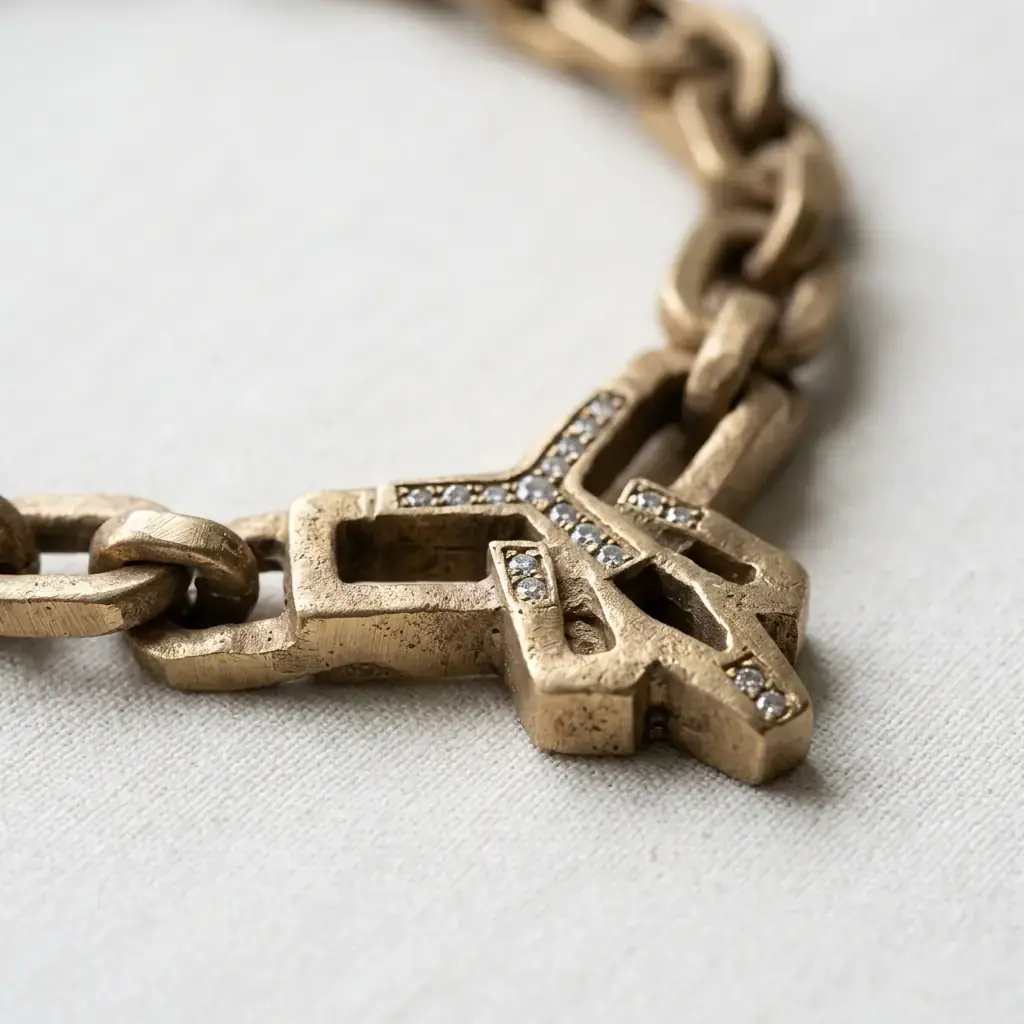
Custom Brass Necklace Casting Manufacturer: Where Brass Fits in Jewelry Sourcing
Manufacturer Necklace is a key topic for jewelry brands evaluating OEM manufacturing and custom production options.
Brass casting has become a practical starting point for brands testing new necklace designs without committing to precious metals. However, it serves a limited role in fine jewelry production, and buyers should understand exactly where it fits.
Moreover, this guide explains what brass casting offers, where it falls short, and how it compares to the gold and platinum work that defines serious custom fine jewelry programs.
Why Brass Necklace Casting Is Trending
Brand owners face rising gold costs and shorter trend cycles. Consequently, they look for lower-risk ways to prototype and test designs before scaling.
- Gold prices push brands to explore alternative metals for sampling
- Fashion jewelry brands need faster turnaround on trend-driven pieces
- New designers want to validate shapes and silhouettes before investing in precious metals
- Small-batch production models reward low-cost prototyping
Meanwhile, casting technology teams improved actively. Therefore, a brass prototype now predicts fit, weight, and proportion more accurately than ever before.
What Defines Brass Necklace Casting
In addition, brass casting is the process of pouring molten brass alloy into a mold to form necklace components such as pendants, links, and clasps.
- Lower melting point than gold or platinum alloys
- Good detail reproduction for intricate shapes
- Suitable for plating, polishing, and antiquing finishes
- Higher tarnish risk than precious metals
- Limited skin-contact comfort for sensitive wearers
Key Factors for Brass Casting Projects
Design Validation Before Metal Commitment
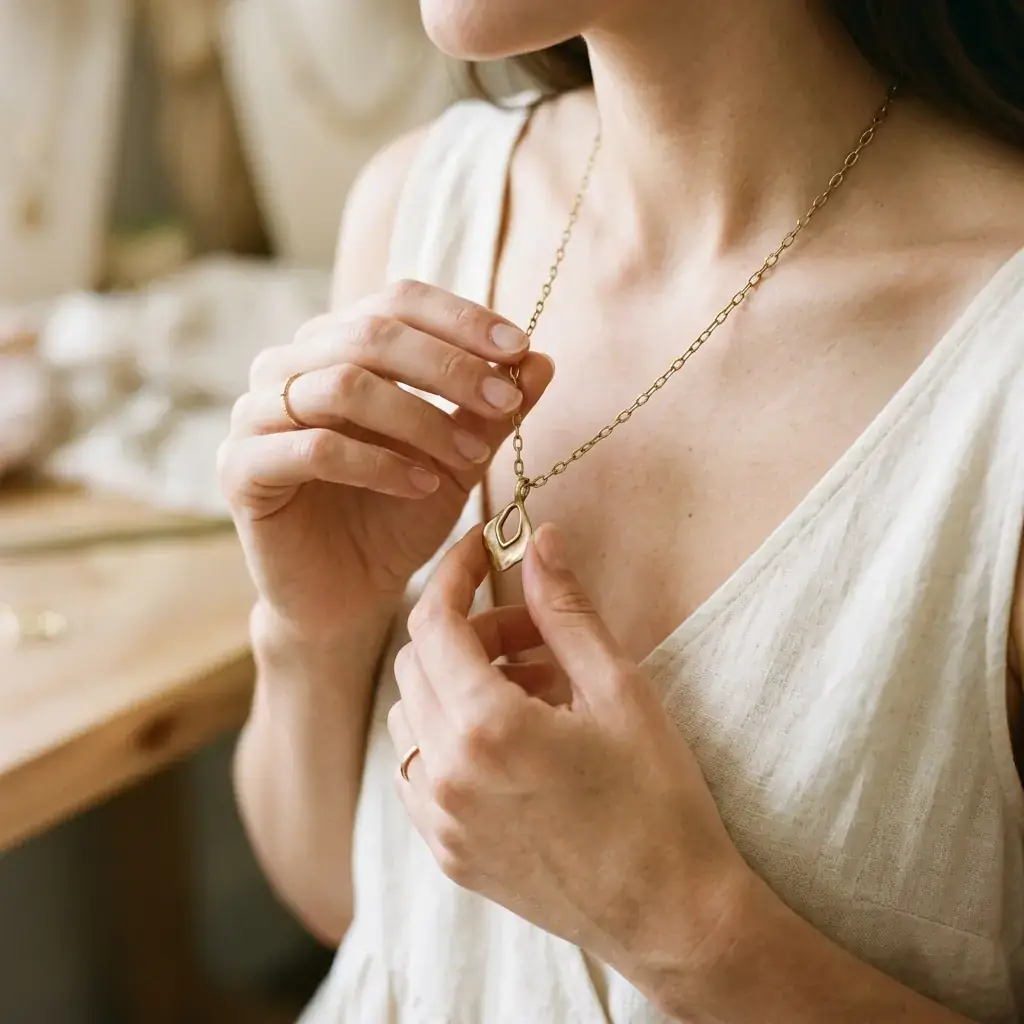
Designers often cast a brass sample first. Subsequently, they review the pendant’s weight, the chain’s drape, and the overall scale on a real neck.
However, this step only works when the CAD file is accurate. Therefore, invest in precise CAD modeling before any casting begins.
Cost and Speed Trade-offs
Brass costs far less than 14K gold or Pt950. As a result, brands can test five brass variants for the price of one gold sample.
Also, brass casting typically ships faster. That said, the savings disappear if the design later needs full re-engineering for precious metals.
When Brass Stops Making Sense
Brass tarnishes, and it reacts with some skin types. Consequently, it suits fashion jewelry, samples, and display pieces.
For engagement rings, wedding bands, or heirloom necklaces, brass is the wrong material. In fact, fine jewelry buyers expect 9K, 10K, 14K, 18K gold or Pt950.
Comparison: Brass vs Precious Metal Necklaces
| Factor | Brass Casting | 14K Gold / Pt950 |
|---|---|---|
| Primary use | Samples, fashion lines | Fine jewelry, heirlooms |
| Tarnish resistance | Low | High |
| Skin comfort | Variable | Excellent |
| Resale value | None | Strong |
| Detail reproduction | Good | Excellent |
Why Custom CAD Matters
CAD design determines whether a brass prototype translates cleanly into gold or platinum later. For this reason, the model must account for shrinkage, wall thickness, and stone settings from the start.
At Alpha Jewelry, clients often begin with a brass or resin sample to confirm proportions, then move the approved CAD file into 9K, 14K, 18K gold, or Pt950 for the final custom fine jewelry piece.
FAQ
Is brass casting suitable for custom engagement rings?
No. Engagement rings demand durability and skin safety, so 14K, 18K gold, or Pt950 remains the standard.
Can a brass prototype become a gold necklace?
Yes, if the CAD file is accurate. The same design can be cast in gold or platinum after approval.
Does brass jewelry tarnish quickly?
Yes. Brass oxidizes faster than gold, so it needs plating or regular polishing to stay bright.
What is the minimum order for brass casting?
Many manufacturers accept small runs, and one-piece custom making is often supported for sampling.
How long does brass casting take?
Simple brass pieces can ship in days, while full custom fine jewelry typically takes 7-14 days after CAD approval, depending on complexity.
Conclusion
Brass casting remains a useful tool for prototyping and fashion jewelry, but it stays outside the fine jewelry category. As gold prices fluctuate, brands will keep using brass to test ideas quickly, then commit to precious metals for pieces meant to last.