

Jewelry Industry News: Blue Nile Lands Royal Asscher


Today’s jewelry industry news roundup covers a major retail partnership, a seven-figure store renovation, and fresh insight into how jewelers spend their working hours. Each story lands at a different point in the supply chain, yet all three speak to the same pressure: retailers must choose where to invest money, space, and attention.
Blue Nile and Royal Asscher moved first. Meanwhile, a Texas jeweler bet millions on the in-store experience. In addition, a new survey of 68 jewelers revealed which jobs owners would hand off tomorrow if they could.
Blue Nile Becomes Exclusive North American Retailer of Royal Asscher Diamonds
Blue Nile now sells Royal Asscher diamonds as the brand’s exclusive retail partner across North America. The agreement gives the online retailer sole access to the Royal Asscher cut and its associated inventory in the region.
Royal Asscher built its reputation on the 121-facet Asscher cut, a silhouette with a devoted following among collectors. For this reason, the partnership pairs a heritage diamond name with a retailer known for scale and digital reach.
The deal also signals how diamond brands now pick partners. Rather than spread inventory across dozens of counters, Royal Asscher chose one channel for the entire continent. Similarly, Blue Nile gains a differentiated product that competitors cannot stock.
Key takeaways:
– Blue Nile holds exclusive North American retail rights to Royal Asscher diamonds.
– The partnership centers on the Royal Asscher cut and its collector appeal.
– Exclusive distribution keeps the brand out of competing storefronts.
David Gardner’s Jewelers Unveils $3 Million Store Remodel in College Station, TX
David Gardner’s Jewelers opened a remodeled showroom in College Station, Texas, after a $3 million investment. The project reworks the store’s layout, lighting, and client-facing spaces.
Independent jewelers rarely spend at this level on a single location. That said, the move reflects a broader bet: shoppers still value a physical showroom when the experience feels deliberate.
The remodel also positions the store near a growing university market. As a result, the retailer can court younger buyers while keeping its established clientele.
Key takeaways:
– The College Station store reopened after a $3 million renovation.
– The remodel targets layout, lighting, and the overall client experience.
– The investment underscores confidence in brick-and-mortar retail.
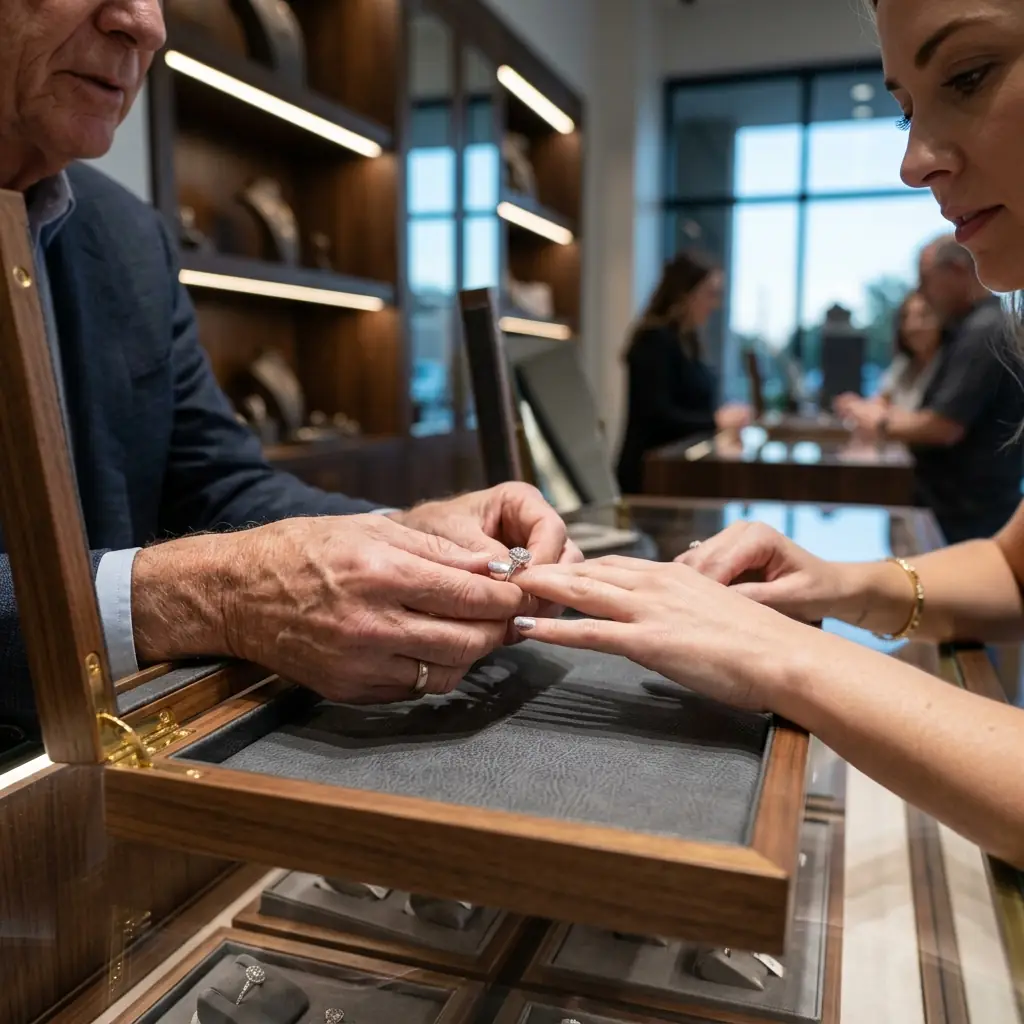
68 Jewelers Reveal Which Tasks They Would Hand Off First
Instore Magazine asked 68 jewelers a simple question: if you could clone yourself, which part of the job would you hand off? Their answers expose where independent retail time actually goes.
Marketing and social media topped many lists. Bookkeeping, payroll, and vendor follow-ups also appeared often. Furthermore, several owners named bench work and repair intake as tasks they would gladly delegate.
The responses highlight a staffing gap. Owners often act as buyer, marketer, manager, and bench jeweler at once. Therefore, hiring remains the hardest decision many of them face.
Key takeaways:
– Sixty-eight jewelers shared the tasks they would delegate first.
– Marketing, accounting, and bench work dominated the answers.
– The results point to persistent staffing strain in independent retail.
What This Means for the Jewelry Trade
These three stories describe one market from different angles. Blue Nile and Royal Asscher show that exclusivity now drives diamond partnerships. In addition, the Texas remodel proves that independents still invest in physical space when the location supports it.
For this reason, the survey responses matter most. Jewelers who cannot delegate marketing or bookkeeping will struggle to compete with larger, better-funded rivals. Meanwhile, custom and made-to-order work keeps growing, and factories such as Alpha Jewelry now field more direct inquiries from retailers that want flexible production without heavy inventory.
Jewelry Industry at a Glance
- Blue Nile holds exclusive North American retail rights to Royal Asscher diamonds.
- Royal Asscher is known for its 121-facet Asscher cut.
- David Gardner’s Jewelers spent $3 million remodeling its College Station, Texas store.
- Instore Magazine surveyed 68 jewelers about task delegation.
- Marketing, bookkeeping, and bench work ranked among the most-delegated jobs.
Common Questions About Today’s Jewelry News
Q: What does Blue Nile’s Royal Asscher deal mean for other retailers?
A: The agreement blocks other North American retailers from stocking Royal Asscher diamonds through official channels, so competing stores lose access to that branded cut.
Q: Why is exclusive distribution growing in the diamond trade?
A: Brands use exclusivity to control pricing, protect margins, and give one retail partner a product that rivals cannot match.
Q: How much did David Gardner’s Jewelers spend on its remodel?
A: The retailer invested $3 million in the College Station, Texas store renovation.
Q: Why do independent jewelers invest in store remodels?
A: A stronger showroom improves the client experience, supports higher-ticket sales, and differentiates the store from online competitors.
Q: Which tasks do jewelers most want to delegate?
A: Marketing, social media, bookkeeping, payroll, vendor follow-ups, and bench work appeared most often in the survey.
Q: What does the delegation survey reveal about staffing?
A: It shows that many owners still handle too many roles alone, which limits growth and increases burnout risk.
Sources Referenced Today
- Instore Magazine: jeweler task delegation survey
- Instore Magazine: Blue Nile and Royal Asscher partnership
- Instore Magazine: David Gardner’s Jewelers store remodel


