Blog
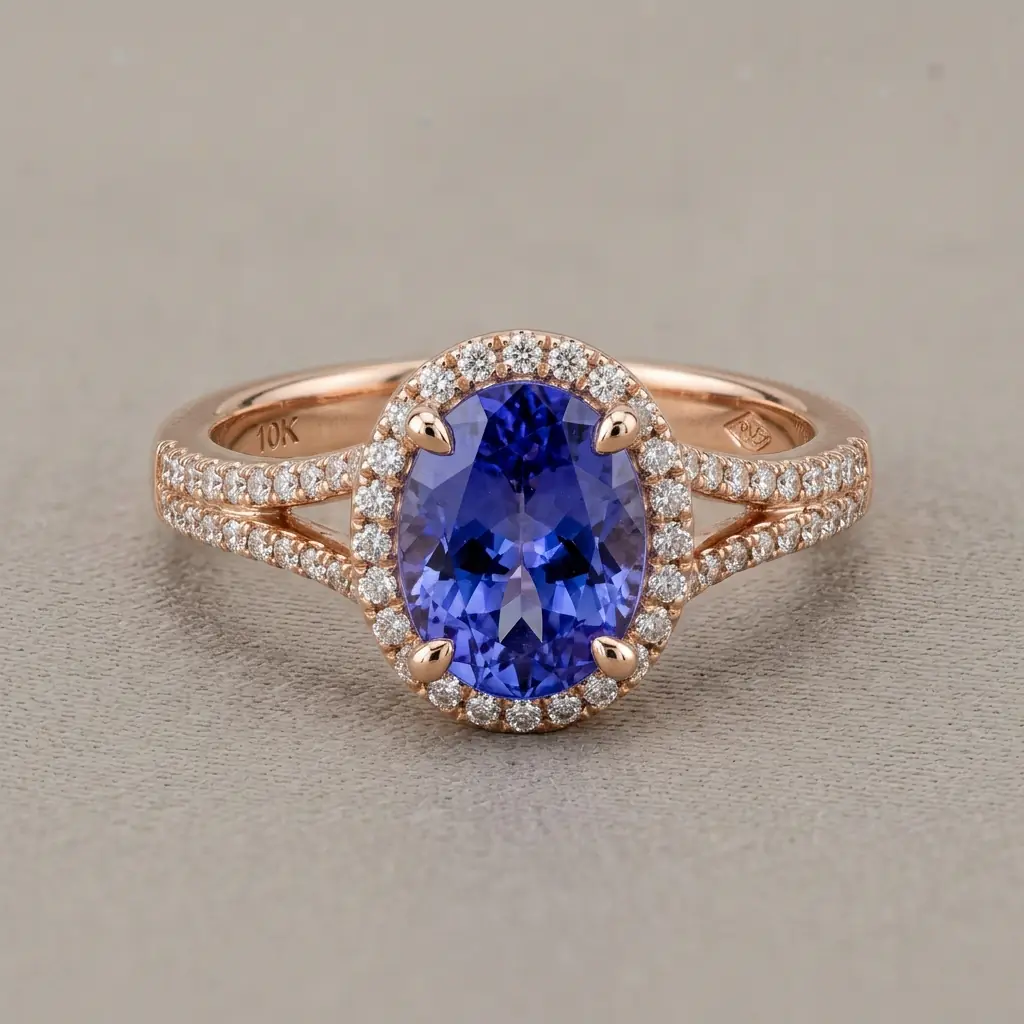
Private Label 10K Rose Gold Tanzanite Engagement Ring Supplier: What Bridal Brands Need to Know
Moreover, bridal buyers search differently in 2026. They want a stone that stands apart from the sea of white diamonds, and tanzanite delivers that violet-blue depth at a fraction of the rarity risk. For brand owners, this creates a clear opening: a private label 10K rose gold tanzanite engagement ring supplier who can deliver consistent quality at scale.
However, sourcing tanzanite in rose gold is not the same as sourcing a standard diamond solitaire. The stone is softer, the color is directional, and the metal tone changes how the gem reads on the hand. This guide breaks down what actually matters when you evaluate a supplier for this specific niche.
Why Private Label Tanzanite Rings Are Trending
Tanzanite sits in a rare position. It is a single-source gemstone, which gives it natural scarcity appeal, yet it remains accessible compared to fine sapphire or emerald. Meanwhile, rose gold has held its bridal momentum for several seasons and shows no sign of fading.
- Buyers want color that photographs well for social and Pinterest discovery
- 10K rose gold offers durability and a warmer price point than 14K or 18K
- Private label lets brands own the design story instead of reselling generic stock
- Retailers face margin pressure and need differentiated SKUs, not more white solitaires
As a result, brands that move early on tanzanite and rose gold combinations capture a less crowded search space. The transition is simple: the real work is in supplier selection.
What Defines a Strong Private Label Tanzanite Supplier
In addition, a reliable partner for this category standards define less by catalog size and more by control over the supply chain.
- Direct access to calibrated tanzanite in consistent hue and clarity
- In-house CAD and casting rather than outsourced middlemen
- Ability to hold a color standard across repeat production runs
- Transparent grading and disclosure on every stone
- Capacity for one-piece custom making alongside small-batch orders
Key Factors When Choosing a Supplier
Stone Consistency Across Batches
Tanzanite varies more than diamond. Two stones graded the same can still read differently under retail lighting. Therefore, ask how a supplier calibrates hue, tone, and saturation before setting.
Metal and Setting Compatibility
Rose gold flatters tanzanite because the warm copper undertone contrasts the cool violet. However, 10K rose gold is harder and holds prongs better than softer high-karat alloys, which matters for a stone with moderate hardness. Also, bezel settings protect the stone better than thin prongs for daily wear.
Production Flexibility and Lead Time
Brands testing a new line rarely want a large commitment. Consequently, one-piece custom making and small-batch production become deciding factors. A workable timeline runs roughly 7 to 14 days after CAD approval, depending on complexity.
Comparison: Setting and Metal Choices
| Factor | Bezel Setting | Prong Setting | Low Profile | High Profile |
|---|---|---|---|---|
| Stone protection | High | Moderate | High | Lower |
| Light performance | Softer | Maximum | Moderate | Maximum |
| Daily wear risk | Low | Medium | Low | Higher |
| Visual style | Modern | Classic | Understated | Dramatic |
| Best for | Active wearers | Sparkle focus | Minimalist taste | Statement rings |
Why Custom and CAD Matter Here
Tanzanite rewards precision. Because the stone is directional, a CAD model lets you test how a specific cut sits in a 10K rose gold head before any metal is cast. In addition, CAD iteration reduces waste on a gemstone that is not cheap to replace.
At Alpha Jewelry, clients often start with a single reference ring and refine proportions across several renders before approving production. That process keeps color, coverage, and comfort aligned with the brand’s positioning.
FAQ
Is tanzanite suitable for an engagement ring?
Yes, with care. Tanzanite ranks around 6 to 7 on the Mohs scale, so a protective bezel or well-structured prongs suit daily wear better than an exposed high setting.
Why pair tanzanite with 10K rose gold specifically?
The warm copper tone of rose gold contrasts the violet-blue of tanzanite, making the color read richer. Also, 10K alloy is harder and more scratch-resistant than higher karats.
Can I order a private label ring in small quantities?
Many manufacturers, including Alpha Jewelry, support one-piece custom making and small-batch runs, which lets brands test demand before scaling.
How long does production take?
Typically 7 to 14 days after CAD approval, depending on design complexity and stone sourcing.
Does tanzanite need special certification?
Reputable suppliers provide grading and disclosure for each stone. Ask for documentation before committing to a production run.
Conclusion
Tanzanite in 10K rose gold remains a narrow but growing bridal niche, and the brands that win it will be the ones with suppliers who control stone consistency and CAD precision. As color-driven engagement rings keep gaining ground, private label flexibility will matter more than catalog breadth.