

Blog
Today’s Industry Context
Today’s news highlights include a record surge in gold prices impacting profitability for retailers like Ramsdens, and a significant milestone for lab-grown diamonds at Queensmith, where they now account for 87% of sales. Additionally, a responsible gold supply deal between SigraFi and PeaceGold underscores growing emphasis on ethical sourcing. These developments directly affect raw material costs, consumer preferences, and supply chain ethics for jewelry manufacturers. The Trading Standards enforcement action also signals tighter regulatory scrutiny on hallmarking and quality compliance.
Custom Lab Grown Diamond Hidden Halo Ring Supplier: A Manufacturing Guide for Brand Owners
The hidden halo engagement ring has evolved from a niche design into a mainstream bridal staple. When paired with lab grown diamonds, it offers a compelling value proposition: the same visual impact as a natural diamond setting at a significantly lower cost. For jewelry brand owners and designers, understanding how to source and produce this specific ring style from a reliable custom lab grown diamond hidden halo ring supplier is critical to meeting consumer demand without sacrificing quality or margin.
This article provides a manufacturing-focused perspective on what to look for in a production partner, covering design precision, stone selection, and factory collaboration essentials.
Why the Hidden Halo Trend Is Growing
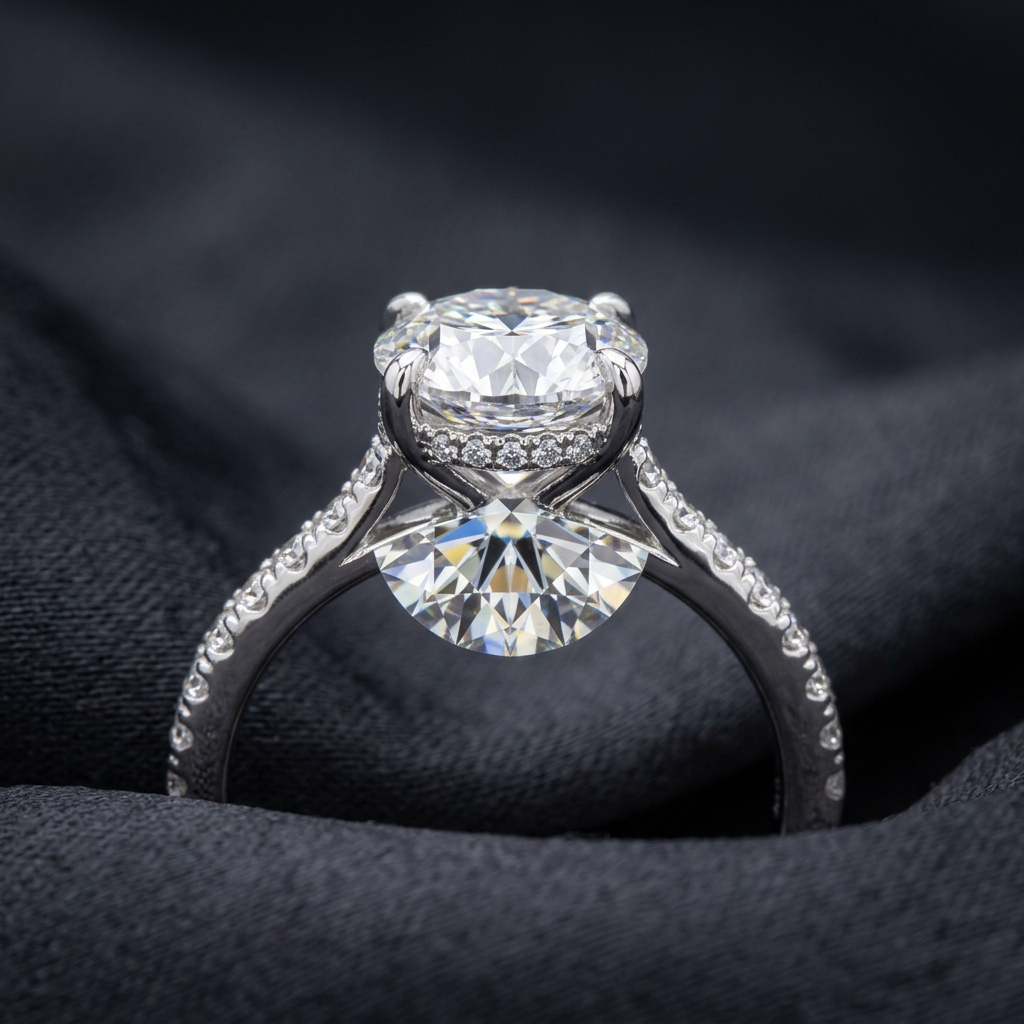
The hidden halo design—a circle of small diamonds set beneath the center stone, visible only from the side or at a certain angle—has gained momentum for several reasons.
- Consumer demand for customization: Buyers increasingly want unique pieces that feel personal, and the hidden halo allows for subtle variation without altering the ring’s silhouette.
- Lab grown diamond adoption: As lab grown diamonds reach record market share, with retailers like Queensmith reporting 87% of sales now lab grown, the hidden halo setting becomes more accessible. The cost savings on the center stone can be redirected into a more intricate setting.
- Social media visibility: The hidden halo creates a “floating” effect that photographs beautifully, making it highly shareable on platforms like Pinterest and TikTok.
- Design versatility: The hidden halo works across multiple center stone shapes (round, oval, pear, cushion) and metal types, giving designers flexibility.
Brand owners who partner with a custom lab grown diamond hidden halo ring supplier can capitalize on this trend by offering a design that feels both modern and timeless.
What Defines a Quality Hidden Halo Setting
A well-executed hidden halo is not simply a ring with small diamonds underneath the center stone. It requires precise engineering to ensure durability and visual harmony.
- Stone alignment: The melee diamonds in the halo must be evenly spaced and set at a consistent angle to catch light uniformly.
- Center stone clearance: The gap between the center stone and the halo must be calculated to allow the halo to be visible without compromising the security of the main stone.
- Metal thickness: The bridge or gallery where the halo sits must be thick enough to withstand wear but thin enough to maintain a delicate appearance.
- Prong placement: Prongs holding the center stone should not obstruct the halo view from the intended angles.
- Finish consistency: The metal finish (polished, brushed, or matte) should match across the entire ring, including the hidden areas.
When evaluating a custom lab grown diamond hidden halo ring supplier, request CAD renderings and sample pieces to verify these details.
Key Factors for Selecting a Manufacturing Partner
Design and CAD Capability
The hidden halo is a geometry-dependent design. A supplier must have advanced CAD (Computer-Aided Design) software and experienced designers who can translate a 2D sketch or inspiration image into a 3D model with accurate proportions. At Alpha Jewelry, clients often begin with a reference image, and the CAD team adjusts the halo diameter, stone count, and prong height to achieve the desired look. The ability to revise the CAD before production is essential—it saves time and prevents costly errors in the final piece.
Stone Sourcing and Grading
A custom lab grown diamond hidden halo ring supplier should offer a range of lab grown diamond options, including CVD and HPHT stones, in various color and clarity grades. For the hidden halo itself, melee diamonds (typically 0.5mm to 1.5mm in diameter) must be well-matched in color and cut. A mismatch between the center stone and halo stones can be noticeable under direct light. Ask about the supplier’s stone inventory and whether they can source specific sizes or qualities for a single ring.
Production Lead Time and Communication
The hidden halo setting requires multiple production steps: CAD design, casting, setting, and finishing. A reliable supplier will provide a clear timeline from CAD approval to final inspection. For a custom piece, a 7-14 day production timeline after CAD approval is standard, depending on complexity. Regular updates—photos of the wax model, the cast ring, and the set stones—help brand owners maintain quality control without being on-site.
Comparison Table: Hidden Halo Design Choices
| Feature | Standard Halo | Hidden Halo |
|---|---|---|
| Halo visibility | Visible from top and side | Visible only from side or angle |
| Center stone focus | Stone appears larger | Stone appears to float |
| Profile height | Higher due to visible halo | Lower, more streamlined |
| Resizing difficulty | Easier to resize | More complex due to gallery work |
| Light performance | Halo adds sparkle to top | Halo adds depth from underneath |
Why Custom CAD Design Matters for Hidden Halos
A hidden halo is not a one-size-fits-all setting. The center stone’s dimensions—depth, table percentage, and crown angle—determine how much light passes through to the halo below. A generic CAD model may not account for these variables, resulting in a halo that looks dull or is barely visible. Custom CAD design allows the supplier to tailor the halo’s angle and stone size to the specific center stone. This level of precision is why many brand owners prefer working with a custom lab grown diamond hidden halo ring supplier that offers in-house CAD services rather than using pre-set designs.
FAQ
Q1: What is the difference between a hidden halo and a standard halo?
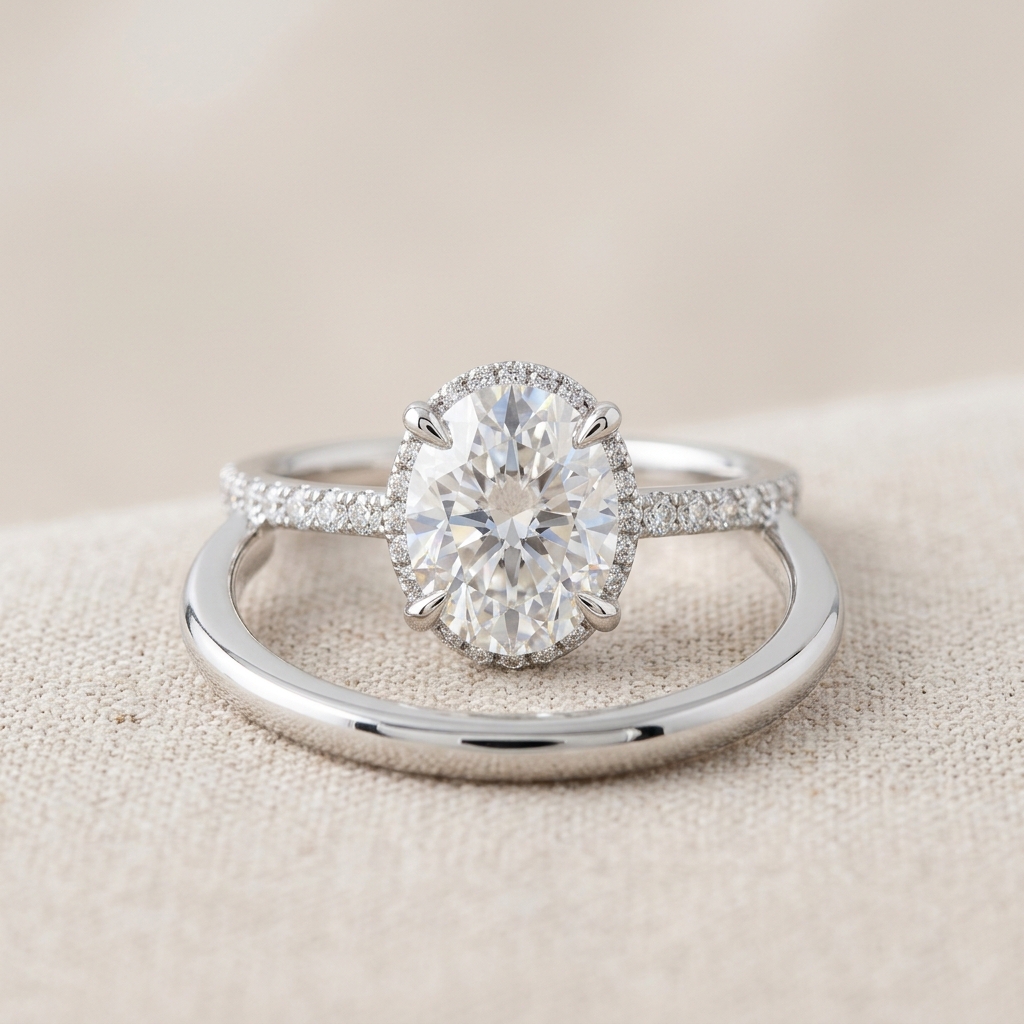
A: A standard halo surrounds the center stone on the top plane, making it appear larger. A hidden halo sits below the center stone, visible only from the side or at an angle, creating a floating effect.
Q2: Can a hidden halo be added to any engagement ring style?
A: Yes, but it works best with solitaire and three-stone settings where the center stone is raised above the band. Low-set bezel designs may not have enough clearance for a visible hidden halo.
Q3: How many stones are typically in a hidden halo?
A: The number varies by ring size and center stone diameter, but a typical hidden halo uses 8 to 16 melee diamonds, each 0.8mm to 1.5mm in size.
Q4: Does a hidden halo make the ring harder to resize?
A: Yes, resizing a hidden halo ring is more complex because the gallery work and stone settings must be adjusted. It is best to size the ring accurately at the time of production.
Q5: Are lab grown diamonds suitable for hidden halos?
A: Absolutely. Lab grown diamonds offer the same optical properties as natural diamonds, and their lower cost makes it more affordable to use higher-quality melee stones in the halo.
Conclusion
The hidden halo engagement ring, powered by lab grown diamonds, represents a convergence of design innovation and market accessibility. For jewelry brand owners, the key to delivering this style successfully lies in choosing a manufacturing partner with strong CAD capabilities, precise stone matching, and transparent communication. As consumer preference for lab grown diamonds continues to grow, the hidden halo will remain a defining design element in modern bridal jewelry.


