

Blog
Today’s Industry Context
Today’s news highlights include a record surge in gold prices boosting profits for Ramsdens, a significant milestone for lab-grown diamonds at Queensmith (87% of sales), and a responsible gold supply deal between SigraFi and PeaceGold. These developments directly impact jewelry manufacturing costs, material sourcing strategies, and the growing acceptance of lab-grown diamonds in the market. For a custom fine jewelry factory like Alpha Jewelry, these trends influence pricing, material options, and consumer demand for ethical sourcing.
Custom Lab Grown Diamond Hidden Halo Ring Manufacturer: What Brand Owners Need to Know
The hidden halo engagement ring has evolved from a niche design into a staple of modern bridal collections. When paired with lab grown diamonds, the category is experiencing explosive demand. For jewelry brand owners and designers, understanding how to work with a custom lab grown diamond hidden halo ring manufacturer is no longer optional — it is a competitive necessity. The rise of lab grown diamonds, which now account for a record 87% of sales at some retailers, signals a permanent shift in consumer preference.
This article provides a professional manufacturing perspective on what defines quality in this category, how to approach production, and what to expect when collaborating with a factory partner.
Why the Hidden Halo Is Dominating Bridal
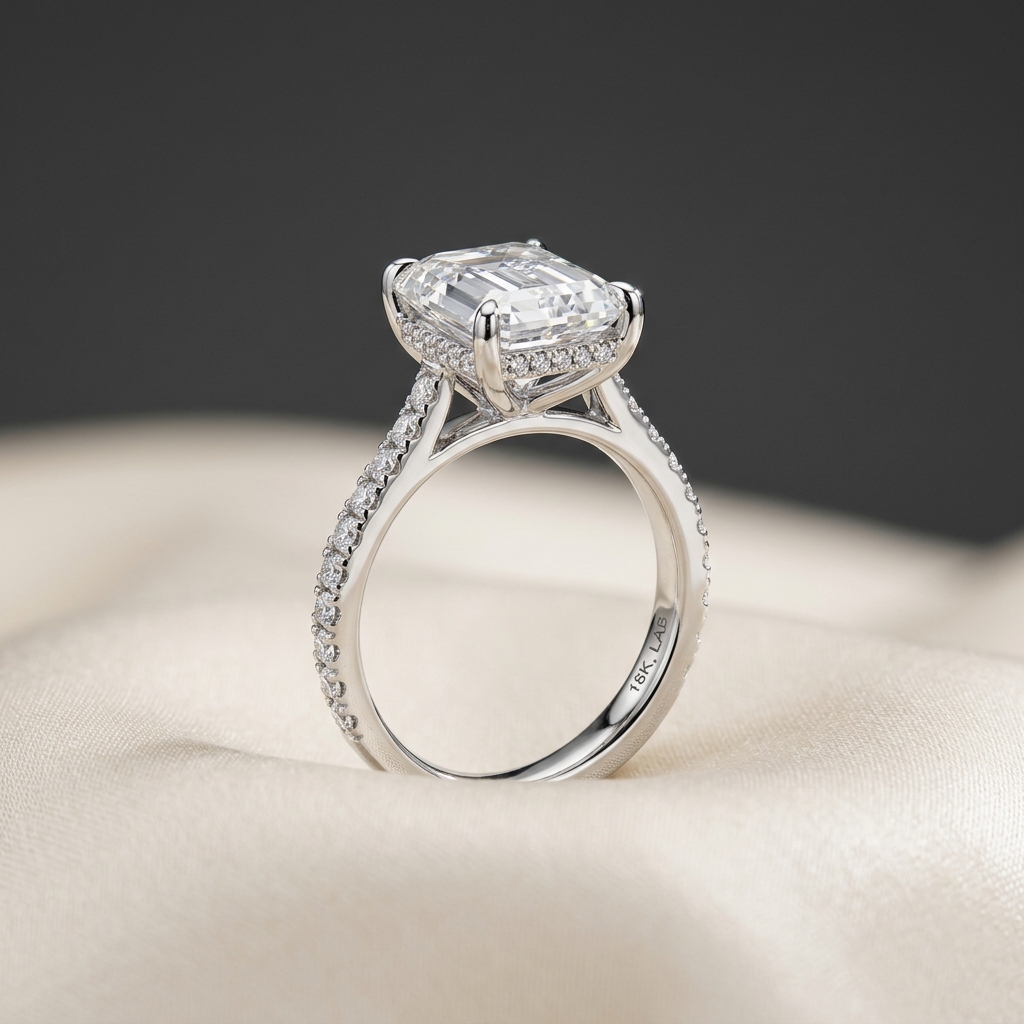
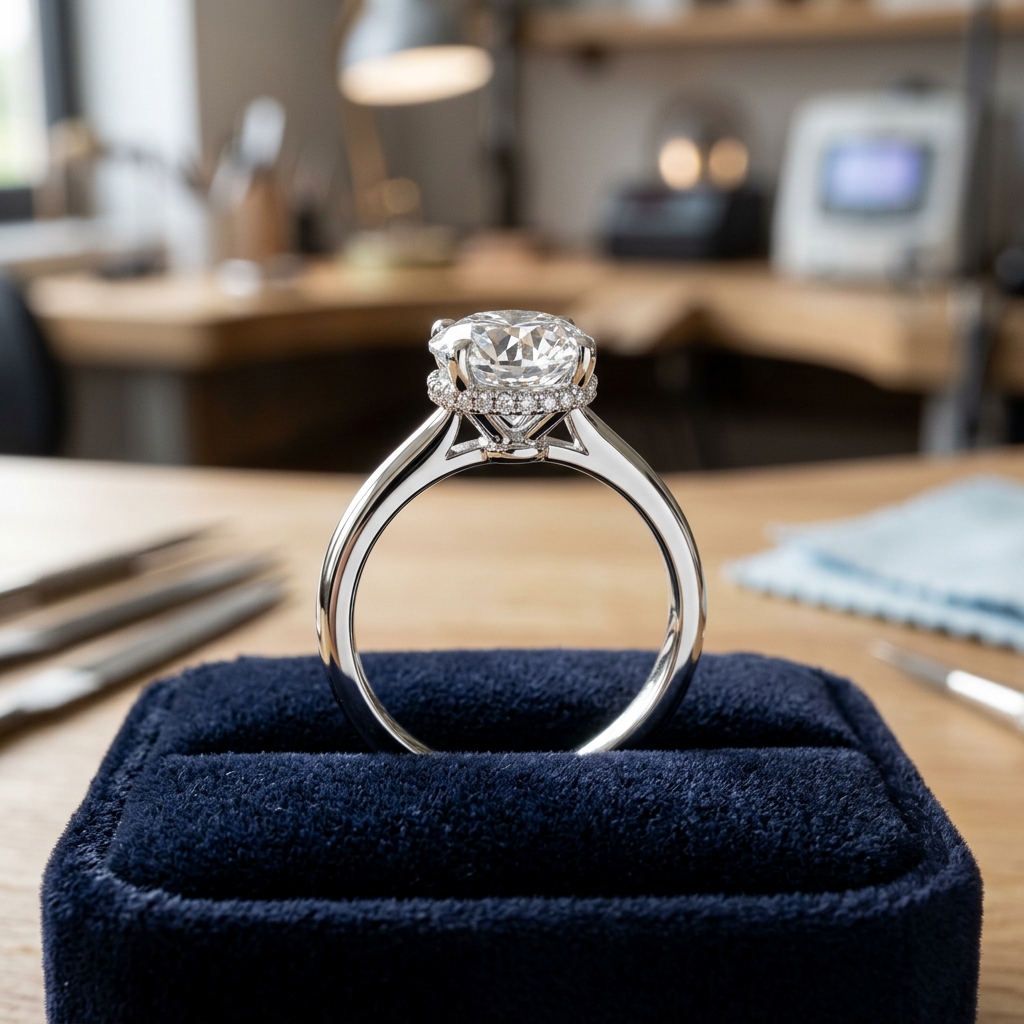
The hidden halo ring offers a unique visual trick: a ring of small diamonds set beneath the center stone, visible only from certain angles. This design satisfies two competing consumer desires — a clean, minimalist top view and a surprising sparkle from the side.
Several market shifts are driving this trend:
- Consumers increasingly prioritize value. A lab grown diamond hidden halo provides maximum brilliance per dollar spent, as the hidden halo uses smaller stones that add significant visual impact without a proportional cost increase.
- Social media platforms reward unique details. The “surprise” element of a hidden halo photographs well and generates engagement, making it a favorite among influencers and bridal content creators.
- Design versatility appeals to a broad demographic. The hidden halo works equally well with round, oval, and cushion cuts, allowing brands to offer a cohesive collection without sacrificing variety.
- Lab grown diamonds remove the ethical and price barriers that once limited halo designs. With affordable lab grown melee, hidden halos are accessible to a wider customer base.
Brand owners who understand this convergence of design appeal and market reality are best positioned to capture share in the bridal segment.
What Defines a Quality Hidden Halo Setting
A hidden halo is not merely a ring of small diamonds placed under the center stone. Its quality depends on several precise factors:
- Stone alignment and spacing. Each melee diamond must be set with uniform spacing and consistent height to create a seamless ring of light.
- Security of the center stone. The hidden halo must not compromise the structural integrity of the prongs or bezel holding the main diamond.
- Metal thickness and durability. The band and basket must be engineered to withstand daily wear, especially given the halo’s proximity to the finger.
- Finish and polish. The underside of the setting, where the halo sits, must be polished to a mirror finish to maximize light reflection through the melee stones.
Key Factors for Sourcing a Custom Lab Grown Diamond Hidden Halo Ring Manufacturer
Understanding Production Capabilities
Not every jewelry manufacturer can execute a hidden halo to a high standard. The setting requires precise CAD modeling, skilled stone setting, and rigorous quality control. When evaluating a potential partner, look for evidence of experience with micro-pave and invisible-set techniques. A manufacturer that routinely produces complex bridal settings will have the tooling and trained setters needed for consistent results.
The Role of CAD Design in Hidden Halos
CAD design is non-negotiable for this category. The hidden halo must be modeled with exact stone counts, precise claw or bead placement, and a clear view of how light will travel through the setting. At Alpha Jewelry, clients receive photorealistic renderings that show the hidden halo from every angle before production begins. This eliminates guesswork and ensures the final piece matches the designer’s vision.
Quality Control and Stone Sourcing
Lab grown melee diamonds used in hidden halos must be graded for color and clarity consistency. A mismatch in stone color will be visible when the halo catches light. Reputable manufacturers source lab grown melee from certified suppliers and inspect each stone before setting. Request documentation of stone grading and ask about the factory’s protocol for rejecting substandard melee.
| Feature | Standard Halo | Hidden Halo | No Halo |
|---|---|---|---|
| Visibility of halo stones | Clearly visible from all angles | Visible only from side or profile | No halo present |
| Center stone prominence | Reduced by surrounding stones | Maximized from top view | Fully prominent |
| Side sparkle | High, due to visible halo | Moderate to high, depending on angle | Low |
| Design complexity | Moderate | High | Low |
| Consumer perception | Classic, traditional | Modern, surprising | Minimalist, clean |
Why Custom CAD Matters for Hidden Halo Rings
A custom CAD approach allows designers to control every variable of the hidden halo: the number of stones, their size, the angle of the basket, and the height of the center stone. Off-the-shelf settings often compromise on one or more of these elements, resulting in a hidden halo that does not sparkle as intended or feels bulky on the finger.
Custom CAD also enables brand differentiation. By adjusting the halo’s shape — making it slightly oval, asymmetric, or integrated with a unique band profile — designers create a signature look that cannot be easily replicated by competitors. For a category as popular as the hidden halo, originality is a key selling point.
FAQ
What is the difference between a hidden halo and a standard halo?
A standard halo surrounds the center stone and is visible from the top. A hidden halo is set beneath the center stone, so it is only visible from the side or at an angle, preserving a clean top view.
Can a hidden halo be added to any center stone shape?
Yes, but the design must be adapted. Round and oval stones are the most common, but cushion, pear, and emerald cuts can also accommodate a hidden halo with proper CAD modeling.
How many stones are typically in a hidden halo?
The number varies by ring size and stone diameter, but a typical hidden halo contains between 8 and 16 melee diamonds, each ranging from 1.0mm to 1.5mm.
Are lab grown diamonds suitable for a hidden halo?
Yes. Lab grown melee diamonds offer the same optical properties as natural diamonds at a lower cost, making them ideal for hidden halos where multiple small stones are required.
How long does it take to produce a custom hidden halo ring?
Production typically takes 7 to 14 days after CAD approval, depending on the complexity of the setting and the availability of stones.
Conclusion
The custom lab grown diamond hidden halo ring is not a passing trend. It represents a lasting shift in consumer preference toward designs that offer both visual impact and value. For brand owners, partnering with a manufacturer that understands the technical demands of this setting — from CAD precision to stone setting expertise — is the foundation of a successful bridal collection. As the market continues to grow, those who invest in quality execution will stand out.


