

Blog
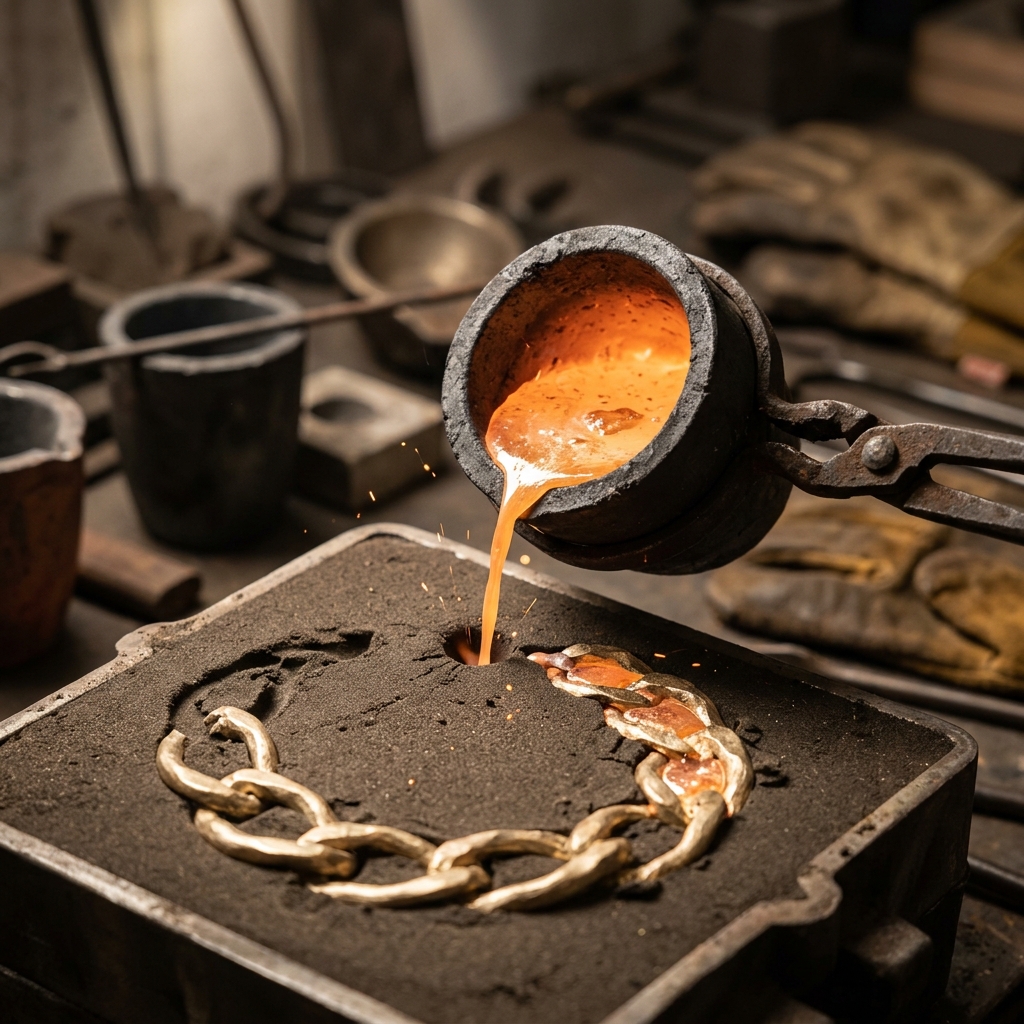
Custom Brass Necklace Casting Manufacturer: Why Brass Stays on the Fringe of Fine Jewelry
Brass necklaces flood fashion markets and Etsy storefronts, yet fine jewelry brands rarely touch the alloy. Buyers searching for a custom brass necklace casting manufacturer often expect a bridge between costume and fine jewelry. That bridge does not exist in the way most assume.
Moreover, brass serves a specific role in the jewelry ecosystem. It offers affordability, bold aesthetics, and rapid prototyping. However, for brands positioning themselves in the custom fine jewelry space, brass remains a limited material. This article explains why brass casting works for certain projects, where it falls short, and how manufacturers like Alpha Jewelry approach the material.
Why Brass Necklace Casting Is Trending
In addition, fashion cycles move fast, and brass fits perfectly into trend-driven production. Social media platforms showcase chunky brass pendants, sculptural collars, and vintage-inspired chains. The look carries weight, literally and visually, at a fraction of the cost of gold or platinum.
For example, several market shifts explain the rising interest:
- Fast fashion jewelry cycles demand low-cost materials that can mimic precious metals
- Emerging designers use brass for concept pieces before committing to fine metal production
- Consumers experiment with statement necklaces without a fine jewelry budget
- Brass allows larger, bolder designs that would be prohibitively expensive in gold
However, the same qualities that make brass attractive for trends limit its long-term value. Brass tarnishes, reacts with skin chemistry, and lacks the durability of precious metals. As a result, most custom brass necklace casting manufacturers position the material for fashion lines, not heirloom pieces.
What Defines Brass Casting for Necklaces
Also, brass is a copper-zinc alloy. Its golden appearance initially resembles 14K gold, which explains its popularity in costume jewelry. The casting process mirrors that of precious metals, but the material behavior differs significantly.
Therefore, key characteristics of brass necklace casting include:
- Lower melting point compared to gold or platinum, which simplifies the casting process
- Excellent detail reproduction for intricate pendant designs
- Affordable material costs that allow oversized, sculptural forms
- Natural golden tone that requires rhodium or gold plating for longevity
- Higher risk of skin discoloration due to copper content
Furthermore, for a custom brass necklace casting manufacturer, these characteristics define the material’s boundaries. Brass works exceptionally well for fashion-forward designs with short lifecycles. It does not suit engagement rings, wedding bands, or fine jewelry meant for daily wear over decades.
Best Approaches for Brass Necklace Production
Fashion-Forward Statement Pieces
Consequently, designers creating runway-inspired collections often choose brass for its sculptural possibilities. The material allows experimentation with volume, texture, and form without precious metal costs. A custom brass necklace casting manufacturer can produce bold geometric pendants, chain-link collars, or mixed-material designs that would strain a fine jewelry budget.
For this purpose, brass excels. Designers can test market response, refine silhouettes, and build brand recognition before transitioning successful pieces to sterling silver or gold.
Prototyping Before Fine Metal Production
Many jewelry brands use brass for prototypes. CAD models translate to brass samples quickly and affordably, allowing designers to evaluate proportions, weight, and drape. This approach reduces risk before committing to expensive gold or platinum production runs.
At Alpha Jewelry, clients often request brass samples during the design phase. The process validates the design concept, then the final piece moves to 14K gold, 18K gold, or platinum. This workflow protects the client’s investment while ensuring the finished piece meets fine jewelry standards.
Plated Brass for Cost-Conscious Lines
Some brands offer plated brass necklaces as entry-level products. Gold plating over brass creates a convincing precious metal look at a fraction of the cost. However, plating wears over time, especially on necklaces that contact skin, perfume, and moisture.
For this reason, plated brass works best for occasional-wear pieces, not daily staples. Brands should communicate this clearly to customers to manage expectations and reduce returns.
Brass vs. Precious Metals: What Buyers Should Know
| Feature | Brass Necklace | Gold Necklace |
|---|---|---|
| Initial cost | Low | High |
| Tarnish resistance | Poor, requires replating | Excellent |
| Skin compatibility | May cause discoloration | Hypoallergenic |
| Long-term value | Minimal resale value | Retains intrinsic worth |
| Design flexibility | Large, bold forms affordable | Size limited by budget |
| Durability | Soft, prone to wear | Durable with proper alloy |
As a result, the table clarifies why brass occupies a narrow lane. For fashion-forward statement pieces, brass delivers. For heirloom-quality custom fine jewelry, gold or platinum remains the standard.
Why Custom CAD Design Matters for Brass Necklaces
CAD design transforms brass necklace production. Digital modeling allows designers to visualize proportions, test weight distribution, and refine details before casting. This process matters more for brass than precious metals because the material’s affordability encourages experimentation.
However, CAD also reveals brass’s limitations. Similarly, a design that looks striking in a digital render may feel cheap in hand. The material’s density differs from gold, affecting how a necklace drapes and balances. Experienced manufacturers adjust designs accordingly.
That said, at Alpha Jewelry, clients receive honest guidance about material selection. Brass suits certain projects, but for custom fine jewelry, precious metals deliver the lasting value most clients seek.
FAQ
Can brass necklaces be worn daily?
Brass tarnishes quickly with daily wear, especially when exposed to moisture, perfume, and body oils. Most brass necklaces require regular polishing or replating to maintain their appearance.
How long does gold plating last on brass?
Gold plating on brass typically lasts six months to two years depending on wear frequency, skin chemistry, and plating thickness. Daily wear shortens this lifespan considerably.
Is brass safe for sensitive skin?
Brass contains copper and zinc, and copper can cause green skin discoloration and irritation for sensitive individuals. Hypoallergenic alternatives include sterling silver, gold, and platinum.
Can brass necklaces be resized or repaired?
Brass can be soldered and resized, but the cost often exceeds the necklace’s value. Most fashion brass pieces are replaced rather than repaired.
Do brass necklaces have resale value?
Brass has minimal scrap value. Unlike gold, which retains intrinsic worth, brass necklaces hold little to no resale value beyond the design itself.
Conclusion
Brass necklace casting serves a practical purpose in the jewelry industry, from fashion-forward statements to cost-effective prototyping. However, its limitations in durability, skin compatibility, and long-term value keep it outside the fine jewelry category. Brands seeking custom fine jewelry should explore brass for concept development, then transition to precious metals for the final piece. The future of brass lies in trend-driven fashion lines, while fine jewelry continues to demand gold, platinum, and meticulous craftsmanship.


