

Blog
Today’s Industry Context
Today’s news highlights include a record surge in gold prices boosting profits for Ramsdens, a significant milestone for lab-grown diamonds at Queensmith (87% of sales), and a responsible gold supply deal between SigraFi and PeaceGold. These developments directly impact jewelry manufacturing costs, material sourcing strategies, and the growing acceptance of lab-grown diamonds in the market. For a custom fine jewelry factory like Alpha Jewelry, these trends influence pricing, material options, and consumer demand for ethical sourcing.
Custom Lab Grown Diamond Hidden Halo Ring Factory: What Brand Owners Need to Know
The hidden halo engagement ring has evolved from a niche design into a mainstream bridal staple. When paired with a lab grown diamond, the combination offers a compelling value proposition: maximum visual impact with a significantly lower material cost. For jewelry brand owners and designers, understanding how a custom lab grown diamond hidden halo ring factory operates is no longer optional—it is a competitive necessity. The recent record from Queensmith, where lab-grown diamonds reached 87% of sales, signals a permanent shift in consumer preference that directly impacts manufacturing strategy.
This article examines the production realities, quality benchmarks, and collaboration frameworks that define successful partnerships with a custom lab grown diamond hidden halo ring factory. The focus is on what professionals need to know, not consumer marketing.
Why the Hidden Halo Setting Is Dominating Manufacturing Orders
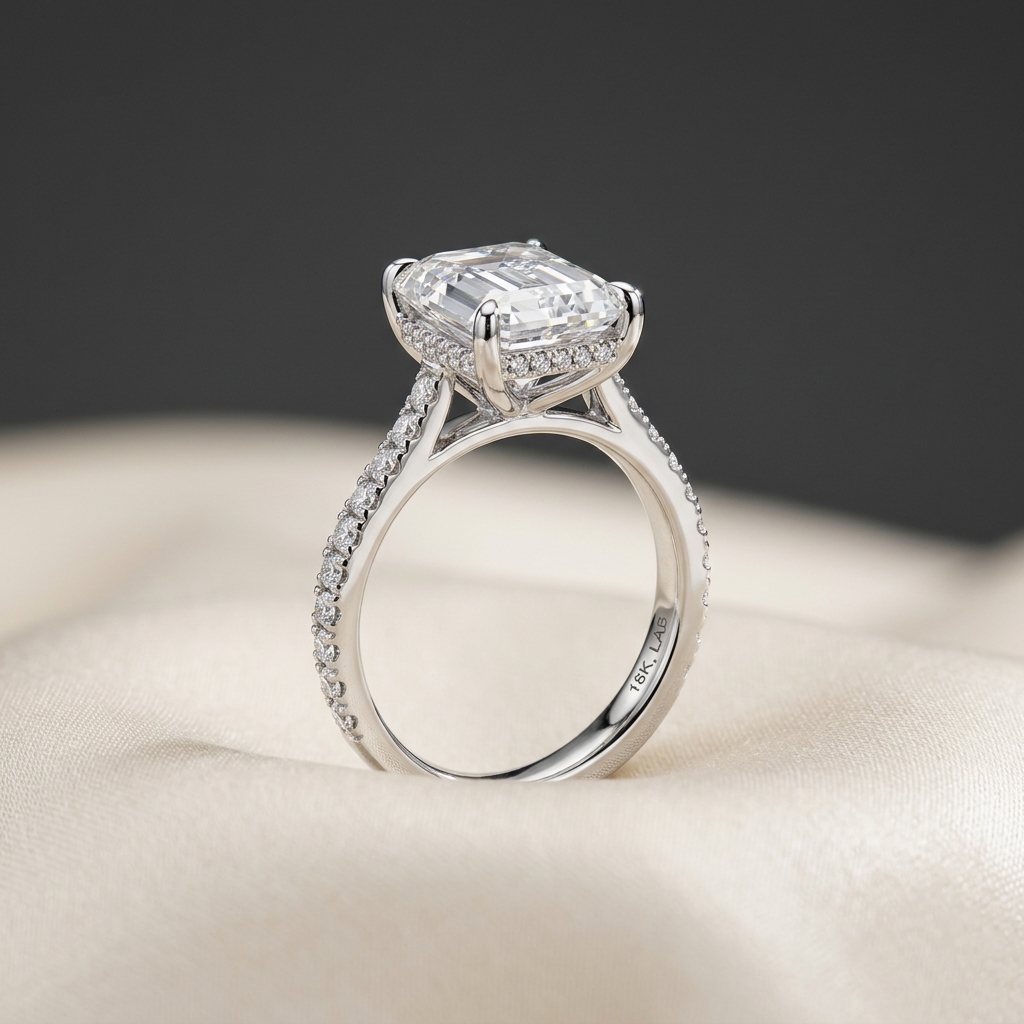
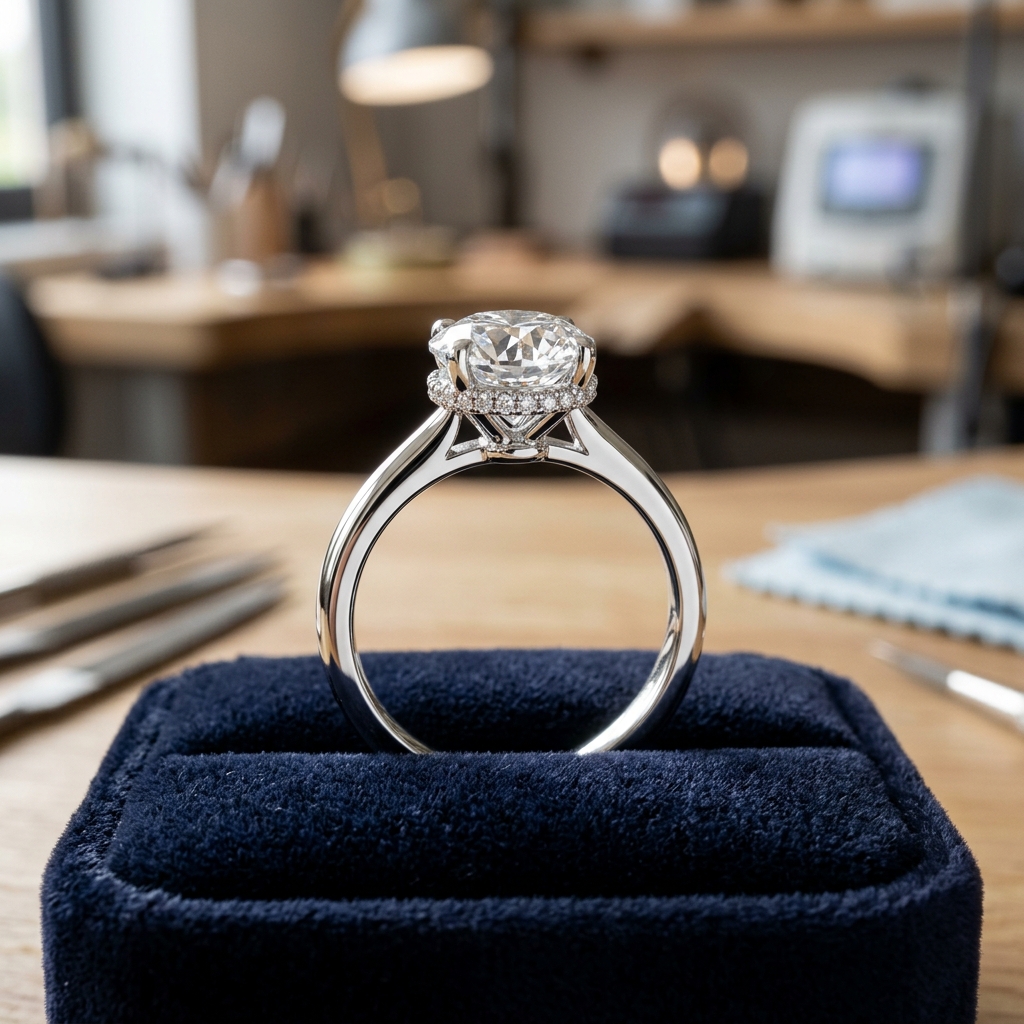
The hidden halo design—where a ring of smaller diamonds sits beneath the center stone, visible only from certain angles—has become a top request for two reasons: it adds perceived size without increasing carat weight, and it creates a floating effect that enhances brilliance. From a factory perspective, this setting presents specific engineering challenges that separate competent manufacturers from exceptional ones.
Key market shifts driving demand:
- Consumer preference for maximum sparkle per dollar, favoring lab grown diamonds that allow larger center stones within the same budget
- Rising awareness that hidden halos require precise CAD engineering to avoid light leakage and structural weakness
- Increased scrutiny on diamond quality as buyers compare lab grown and natural stones side by side
- Demand for one-piece custom making that matches exact design specifications without compromise
For a custom lab grown diamond hidden halo ring factory, the trend means more requests for complex prong configurations, graduated halo stone sizes, and integrated gallery details that require skilled CAD designers and experienced setters.
What Defines a High-Quality Hidden Halo Setting
A well-executed hidden halo is not simply a ring of small diamonds placed under the center stone. It is a precision assembly where every angle, height, and stone alignment contributes to the final optical effect. From a manufacturing standpoint, the following characteristics distinguish premium work:
- Halo stone size and consistency: Each stone in the halo must be identical in cut, color, and clarity. Even a 0.1mm difference in diameter creates visible asymmetry.
- Center stone elevation: The height of the center stone above the halo determines how much light passes through and how the hidden diamonds catch the eye. Too high risks snagging; too low hides the halo entirely.
- Gallery and basket integration: The hidden halo should appear seamless with the basket and shank. Visible solder joints or gaps indicate poor craftsmanship.
- Prong placement: Prongs must hold the center stone securely without obscuring the halo. Four-prong settings are common, but six-prong designs offer better security for larger lab grown diamonds.
- Polishing and finishing: The underside of the setting, where the halo sits, must be as polished as the top. Rough surfaces scatter light and reduce brilliance.
Best Approaches for Working with a Lab Grown Diamond Hidden Halo Factory
Selecting the Right Diamond Quality
Lab grown diamonds offer consistent quality at lower prices, but not all stones are equal. For hidden halo settings, the center diamond must have excellent cut grade because the halo amplifies any light leakage. Color grades G-H are optimal for most designs, as the halo stones can be matched precisely. Clarity grades VS1-VS2 are sufficient; the halo hides minor inclusions.
Communicating Design Specifications
The most common production errors in hidden halo rings stem from incomplete specifications. Provide the factory with exact measurements for the center stone diameter, halo stone count and size, band width and thickness, and overall ring dimensions. A CAD rendering should show the setting from multiple angles, including a cross-section view that reveals how the halo integrates with the basket.
Understanding Production Timelines
A custom lab grown diamond hidden halo ring factory typically requires 7-14 days after CAD approval for a single piece. Complex designs with graduated halos or intricate gallery work may extend to 21 days. Factory direct manufacturing reduces lead times because there is no intermediary. For small-batch production, expect 4-6 weeks depending on stone sourcing and setting complexity.
Comparison Table: Hidden Halo Design Choices
| Feature | Standard Halo | Hidden Halo |
|---|---|---|
| Visibility | Visible from all angles | Visible only from side/angle |
| Center stone appearance | Surrounded by halo stones | Floating above halo stones |
| Light performance | Even sparkle across surface | Concentrated sparkle from center |
| Setting height | Lower profile | Slightly higher profile |
| Perceived size | Larger overall silhouette | Larger center stone appearance |
Why Custom CAD Design Matters for Hidden Halo Rings
The hidden halo is one of the most CAD-dependent settings in fine jewelry. Unlike a standard halo, where the design is visible from every angle and errors are immediately apparent, a hidden halo requires the designer to anticipate how light will interact with stones that are partially obscured. The CAD model must account for the angle of the viewer’s eye, the tilt of the hand, and the way diamonds reflect light from different directions.
At Alpha Jewelry, clients work directly with CAD engineers who specialize in hidden halo geometry. The process begins with a 3D render that shows the ring from all perspectives, including the underside. Adjustments to stone spacing, prong height, and band curvature are made before any metal is cut. This eliminates costly rework and ensures the final piece matches the design intent exactly.
FAQ
What is the difference between a hidden halo and a standard halo setting?
A standard halo sits around the center stone and is visible from the top. A hidden halo sits below the center stone and is only visible from the side or at certain angles, creating a floating effect.
Can a hidden halo be added to an existing engagement ring design?
Yes, but it requires a new setting. The basket and prongs must be redesigned to accommodate the hidden halo structure, which means a new CAD model and casting.
How does the hidden halo affect the durability of the ring?
Properly engineered hidden halos are as durable as standard settings. The key is adequate metal thickness around the halo stones and secure prong placement. Thin bands with hidden halos are more prone to bending.
What size lab grown diamond works best with a hidden halo?
Center stones between 1.5 and 3 carats are ideal. Smaller stones may not provide enough height for the halo to be visible, while larger stones require a wider band for proportion.
How do I verify the quality of a hidden halo before production?
Request a CAD rendering with cross-section views and a resin 3D print. The print allows you to see the halo angle and stone placement before committing to metal.
Conclusion
The hidden halo setting, powered by lab grown diamonds, represents a convergence of consumer desire for value and manufacturers’ ability to deliver precision at scale. For brand owners and designers, the key to success lies in partnering with a factory that understands the engineering behind the design, not just the aesthetic. As lab grown diamonds continue to gain market share, the ability to produce custom hidden halo rings efficiently and accurately will separate leading brands from the rest.


