

Blog
Today’s Industry Context
Today’s news includes a report that Queensmith saw lab-grown diamonds reach a record 87% share of sales, indicating strong consumer shift toward lab-grown. Also, SigraFi signed a responsible gold supply deal with PeaceGold, highlighting growing demand for ethical sourcing. Trading Standards and Sheffield Assay Office found law breaches at jewellers, underscoring compliance importance. These developments are directly relevant to a custom jewelry manufacturer like Alpha Jewelry, affecting material choices, sourcing practices, and quality assurance.
Custom Lab Grown Diamond Hidden Halo Ring Casting Service: A Manufacturing Guide for Jewelry Brands
The hidden halo setting has become one of the most requested engagement ring designs in 2025, and lab grown diamonds now account for a record 87% of sales at leading retailers like Queensmith. For jewelry brand owners and independent designers, understanding the technical nuances of casting a custom lab grown diamond hidden halo ring is essential for delivering quality, consistency, and on-trend aesthetics.
This article breaks down what professionals need to know about production, quality control, and factory collaboration when sourcing a custom lab grown diamond hidden halo ring casting service.
Why the Hidden Halo Trend Is Growing
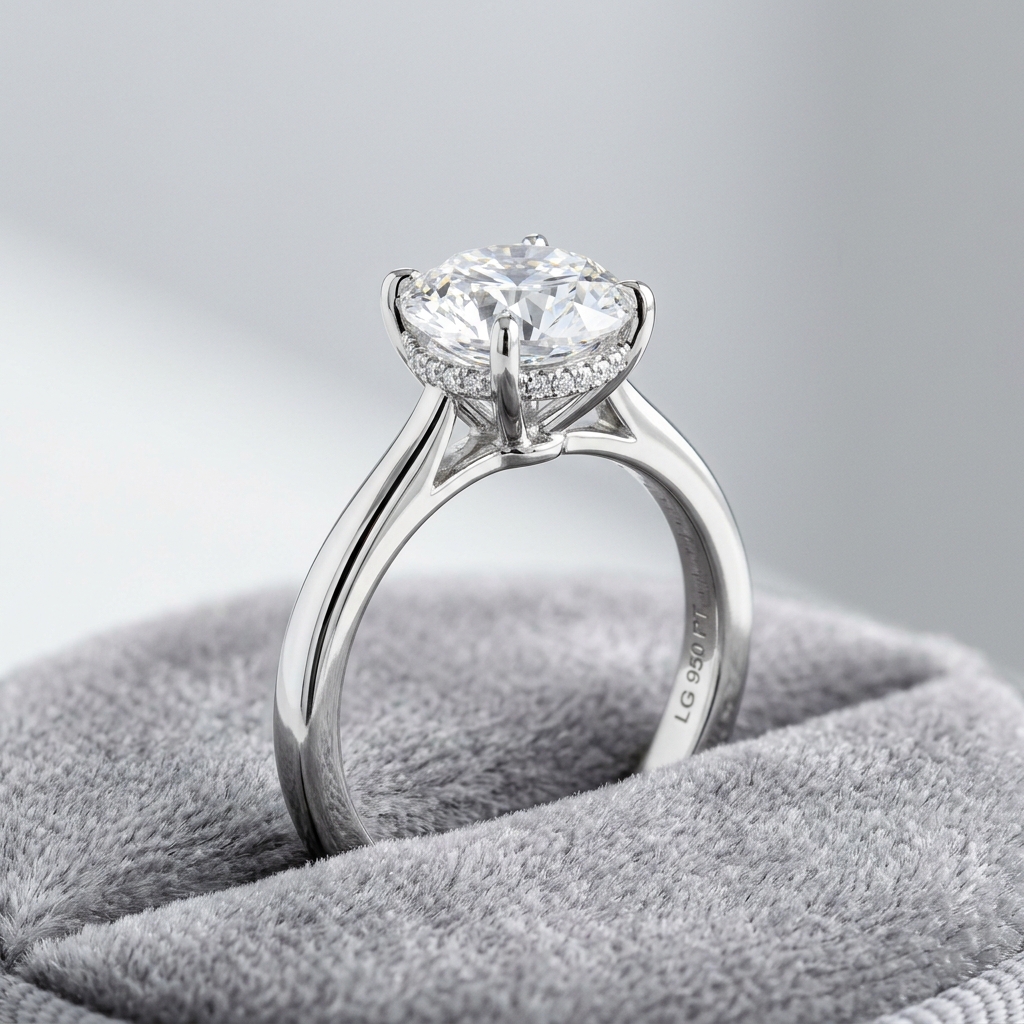
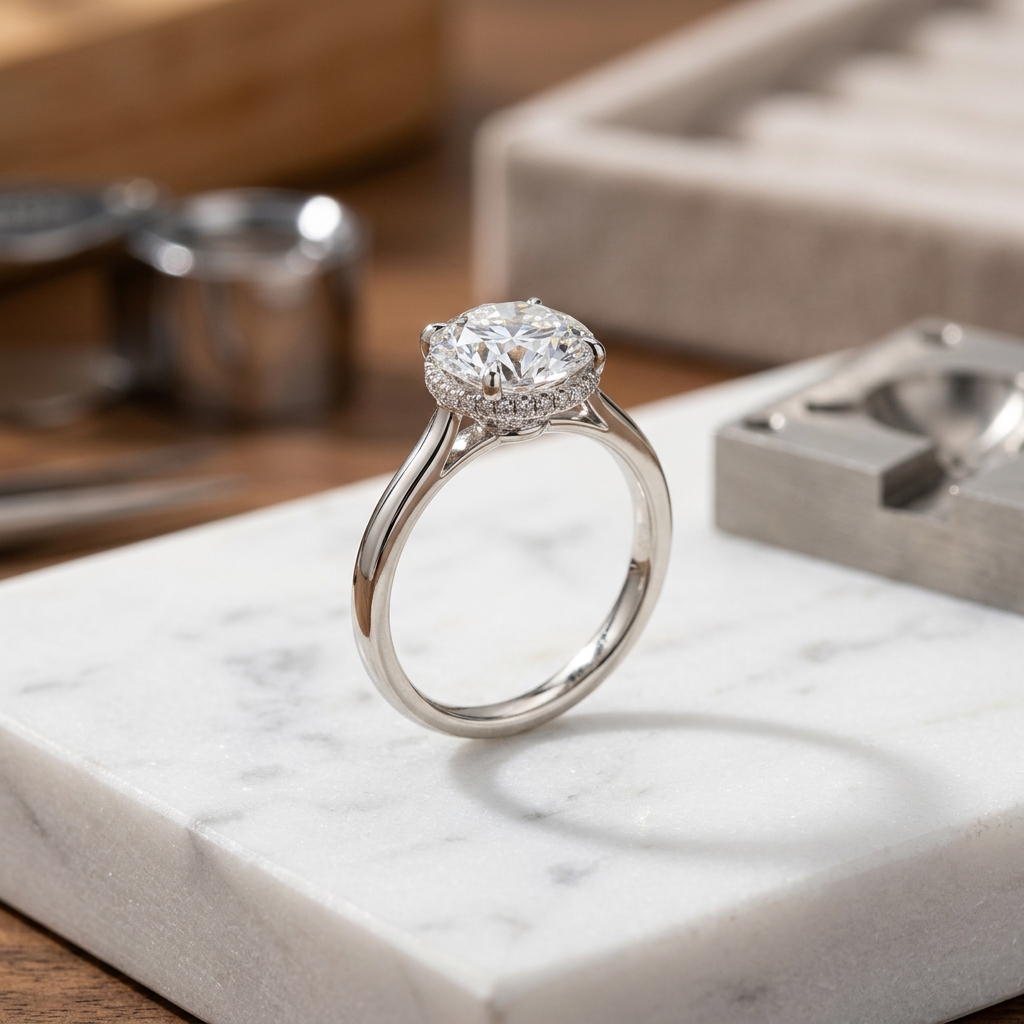
The hidden halo—a ring of small diamonds set beneath the center stone, visible only from certain angles—offers a subtle sparkle that appeals to modern buyers seeking understated luxury. Multiple market shifts are driving demand:
- Record lab grown diamond adoption: Queensmith reported that lab grown diamonds now represent 87% of their bridal sales, indicating mainstream acceptance
- Rising gold prices: With gold prices surging, brands are optimizing designs for stone presence while minimizing metal weight
- Consumer preference for customization: Buyers increasingly want unique designs that reflect personal style, not off-the-shelf options
- Quality transparency: Trading Standards and assay offices are cracking down on mislabeled goods, making reliable manufacturing partners more critical than ever
For brands, offering a custom lab grown diamond hidden halo ring is no longer a niche option—it is becoming an expected category.
What Defines a Quality Hidden Halo Casting
A well-executed hidden halo casting requires precision in both design and manufacturing. Key characteristics include:
- Seamless integration: The halo must be cast as part of the shank or head, not a separate add-on, to ensure structural integrity
- Proper stone alignment: Each melee diamond in the halo must sit at a consistent angle to maximize light return
- Secure setting: The hidden halo should not interfere with the center stone’s setting or prong placement
- Polished interior: Because the halo is visible from the side, the underside of the ring must be finished to the same standard as the top
- Compatible center stone size: The halo diameter must be calibrated to the exact carat weight and dimensions of the lab grown diamond
Key Factors for a Successful Casting Service
Metal Selection and Casting Quality
The choice of metal directly affects how a hidden halo casting behaves during production. Platinum (Pt950) offers superior durability but requires higher casting temperatures and more precise finishing. 18K gold provides a good balance of strength and workability, while 14K and 10K gold are more cost-effective options for brands targeting entry-level price points. Each metal requires different casting parameters, and a factory with experience in all four alloys will deliver more consistent results.
CAD Design for Hidden Halos
Computer-aided design (CAD) is non-negotiable for hidden halo rings. The designer must model the exact relationship between the center stone, the halo melee, and the shank. A poorly designed CAD file can result in a halo that appears crooked or a center stone that sits too high. At Alpha Jewelry, clients receive detailed CAD renders before production begins, allowing for adjustments to stone spacing, halo depth, and overall proportions.
Quality Control in Casting
After casting, each hidden halo ring must be inspected for porosity, shrinkage, and proper stone fit. The melee diamonds in the halo are typically set using micro-pave techniques, which require steady hands and consistent stone sizes. A reputable casting service will check every ring under magnification before setting the center stone.
Comparison Table: Hidden Halo Design Choices
| Feature | Standard Hidden Halo | Custom Hidden Halo |
|---|---|---|
| Center stone visibility | Visible from top and side | Visible from top, subtle from side |
| Halo stone size | 1.0-1.2mm melee | 1.2-1.5mm melee for more sparkle |
| Halo depth | 1.5-2.0mm below girdle | 2.0-2.5mm below girdle for drama |
| Setting style | Shared prong or bead set | Micro-pave or invisible set |
| Center stone compatibility | Round only | Round, oval, cushion, pear |
Why Custom CAD Design Matters
A hidden halo ring is one of the most technically demanding engagement ring styles to produce. The halo must sit at exactly the right height below the center stone’s girdle—too high and it distracts from the main diamond, too low and it becomes invisible. Custom CAD design allows the brand to control every millimeter, ensuring the final piece matches the intended aesthetic.
For brands working with a casting service, the CAD phase is where most issues are caught and resolved. A good factory will provide multiple views, cross-sections, and stone placement diagrams before committing to production.
FAQ
Q1: What is the typical timeline for a custom lab grown diamond hidden halo ring casting?
A: After CAD approval, production typically takes 7-14 days depending on complexity, including casting, finishing, and stone setting.
Q2: Can the hidden halo be added to an existing ring design?
A: Yes, but the shank and head must be redesigned to accommodate the halo structure. It is usually more cost-effective to start from a new CAD file.
Q3: What center stone shapes work best with a hidden halo?
A: Round, oval, and cushion shapes are most common. Pear and marquise shapes can work but require careful halo geometry to maintain symmetry.
Q4: How do I ensure the melee diamonds in the halo match the center stone?
A: Specify the color and clarity grades for both the center stone and halo melee. Most factories can source matching lab grown melee diamonds.
Q5: Is a hidden halo ring more expensive to cast than a standard solitaire?
A: Yes, due to the additional melee diamonds, more complex CAD work, and extra finishing time. The cost increase is typically 20-40% over a solitaire.
Conclusion
As lab grown diamonds continue to gain market share and consumer demand for personalized designs grows, the hidden halo setting will remain a staple in bridal collections. Jewelry brands that invest in understanding the technical aspects of casting—from CAD design to metal selection to quality control—will be better positioned to deliver rings that meet both aesthetic and structural standards. Partnering with a factory that specializes in custom fine jewelry production ensures consistency across every piece.


