

Blog
Today’s Industry Context
Today’s news includes a report that Queensmith saw lab-grown diamonds reach a record 87% share of sales, indicating strong consumer shift toward lab-grown. Also, SigraFi signed a responsible gold supply deal with PeaceGold, highlighting growing demand for ethical sourcing. Trading Standards and Sheffield Assay Office found law breaches at jewellers, underscoring compliance importance. These developments are directly relevant to a custom jewelry manufacturer like Alpha Jewelry, affecting material choices, sourcing practices, and quality assurance.
Custom Lab Grown Diamond Hidden Halo Ring Production: A Manufacturer’s Guide
The hidden halo engagement ring has become a defining silhouette in modern bridal jewelry. When paired with a lab grown diamond, the design offers an exceptional balance of brilliance, value, and ethical sourcing. For jewelry brand owners and designers, understanding the nuances of custom lab grown diamond hidden halo ring production is essential to delivering a product that meets both aesthetic expectations and commercial viability. This guide breaks down the manufacturing process, quality considerations, and how to collaborate effectively with a production partner.
The rise of lab grown diamonds in the bridal market is no longer a trend; it is a structural shift. As confirmed by recent industry data, lab grown diamonds now account for a record 87% of sales at some major retailers, signaling a permanent change in consumer preference. This makes mastering the production of lab grown diamond hidden halo rings a strategic priority for any serious jewelry brand.
Why Custom Lab Grown Diamond Hidden Halo Ring Production Is Trending
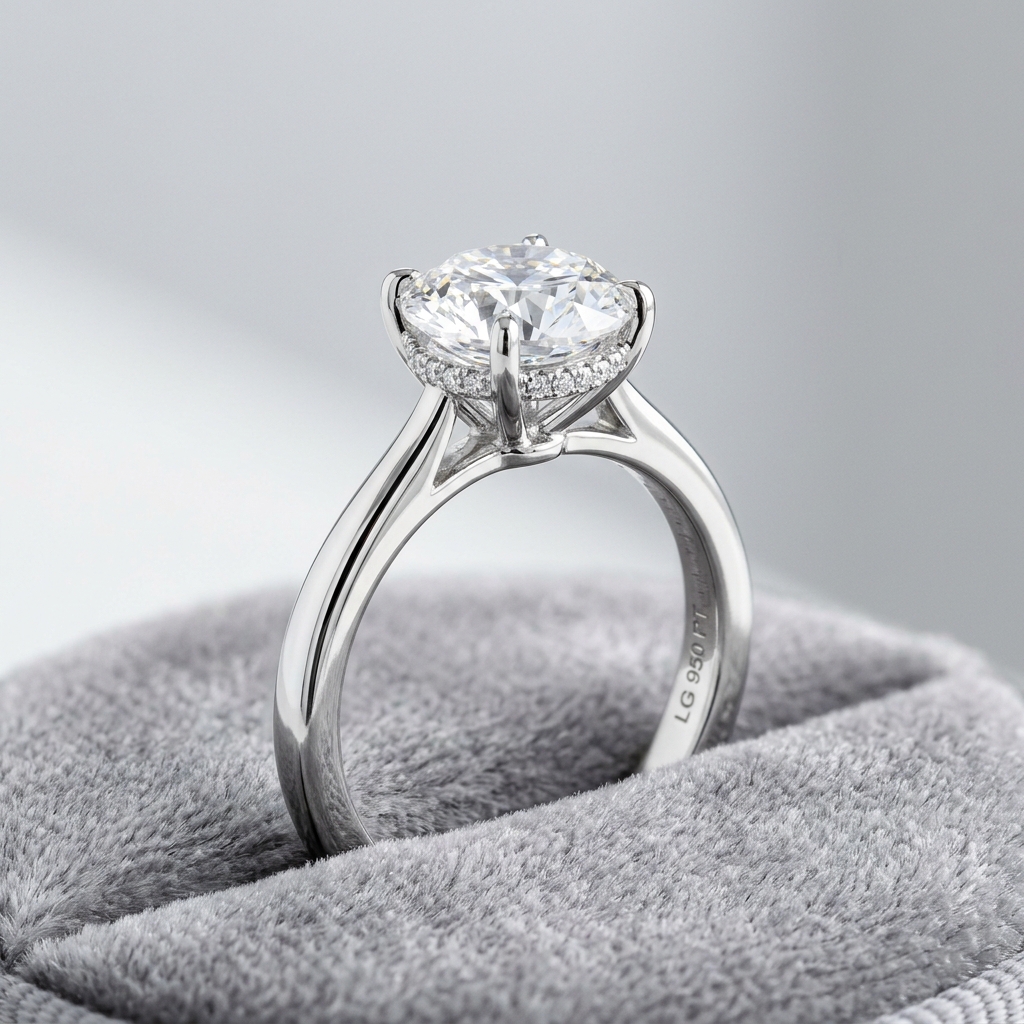
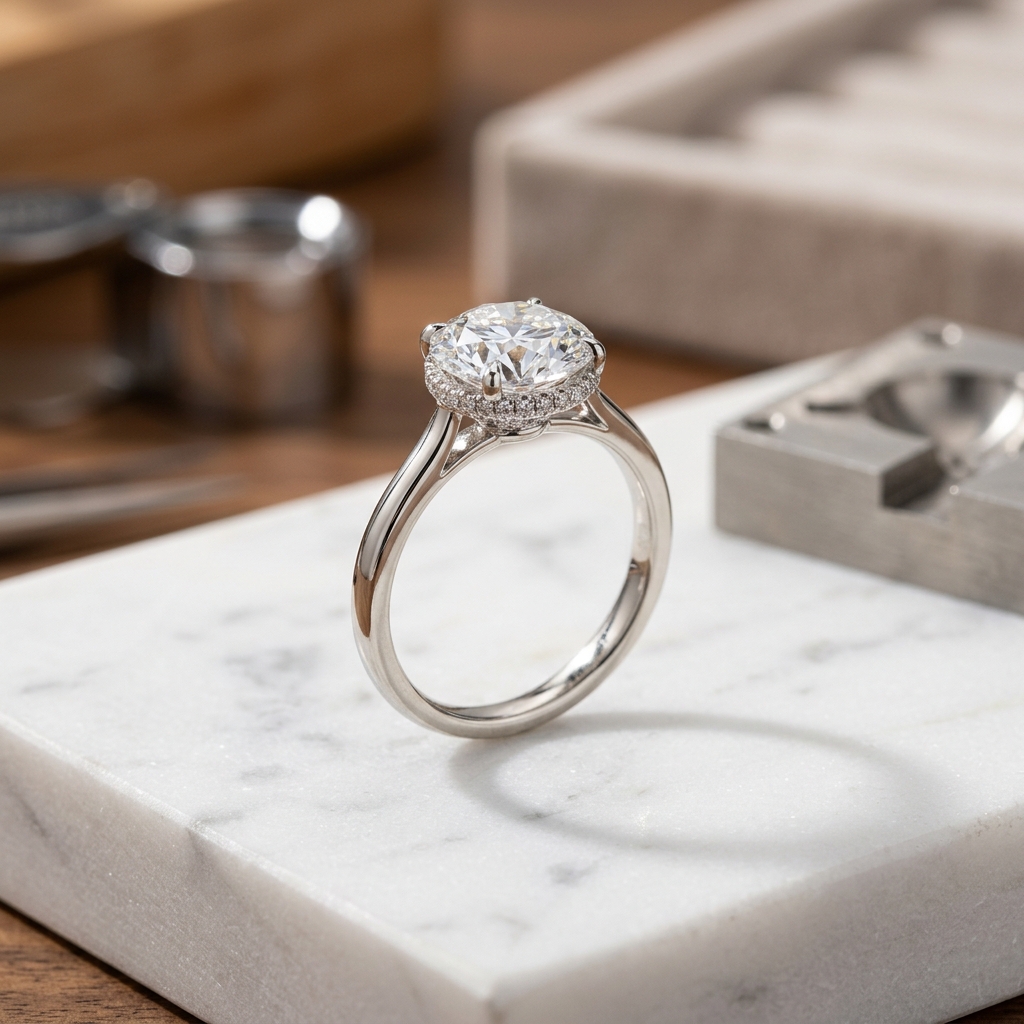
The hidden halo design, where a circle of smaller diamonds is set beneath the center stone, creates a floating, luminous effect that maximizes light return. When executed with a lab grown diamond, the ring offers a compelling value proposition: a larger, higher-quality center stone for the same budget as a smaller natural diamond in a simpler setting.
Key market shifts driving this trend:
- Value optimization: Consumers can afford a larger carat weight or higher color/clarity grade with lab grown diamonds, making the hidden halo’s extra sparkle a cost-effective upgrade.
- Ethical sourcing: Lab grown diamonds offer a transparent, conflict-free supply chain, aligning with the values of a growing segment of buyers.
- Design versatility: The hidden halo works across a range of styles, from solitaires to three-stone settings, allowing for extensive customization.
- Production scalability: Advances in CAD/CAM technology and casting have made the hidden halo design reproducible at scale without sacrificing precision.
For a designer, this means the hidden halo is not a niche product but a core offering that can drive volume and repeat business. The challenge lies in ensuring consistent quality across production runs, particularly in the alignment and symmetry of the halo itself.
What Defines a High-Quality Hidden Halo
A hidden halo is not simply a ring with diamonds underneath the center stone. It is a precision-engineered component that requires careful planning.
- Halo stone size and uniformity: The melee diamonds in the halo must be perfectly matched in color, clarity, and cut to avoid a patchy appearance.
- Prong placement: The prongs holding the center stone must be designed to sit flush with the halo, not obscure it, while still providing secure setting.
- Gallery rail integration: The halo is typically set on a gallery rail that connects the center stone basket to the shank. This rail must be strong enough to support the halo without adding bulk.
- Center stone selection: The hidden halo works best with round brilliant or oval cut diamonds, as these shapes maximize the light-catching potential of the halo below.
- Metal compatibility: The halo’s visual impact is greatest in high-polish precious metals like platinum or 18K white gold, which reflect light back through the diamonds.
Best Approaches for Custom Lab Grown Diamond Hidden Halo Ring Production
CAD Design and Prototyping
The production journey begins with a detailed CAD model. This is where the designer’s vision is translated into a manufacturable file. The CAD must account for the exact dimensions of the center stone, the size and number of halo diamonds, and the thickness of the gallery rail.
At this stage, it is critical to simulate the ring in 3D to check for potential issues like the halo being too low (hidden from view) or too high (catching on clothing). A well-executed CAD file reduces the risk of costly rework during casting and setting.
Casting and Finishing
For most custom hidden halo rings, lost-wax casting is the standard method. The CAD file is used to create a wax model, which is then invested and cast in the chosen metal. The key quality control point here is the surface finish. The gallery rail and basket must be perfectly smooth to allow the halo diamonds to sit evenly. Any porosity or rough edges will be magnified after setting.
Diamond Setting
The setting of the hidden halo is the most labor-intensive step. Each melee diamond must be individually set using a microscope. The setter must ensure that all diamonds are level and that the prongs are uniform. A poorly set halo will appear crooked and will not reflect light evenly. This step is where the experience of the manufacturing partner is most apparent.
Comparison: Hidden Halo vs. Traditional Halo vs. Solitaire
| Feature | Hidden Halo | Traditional Halo | Solitaire |
|---|---|---|---|
| Visual Impact | Subtle, floating brilliance | Bold, prominent sparkle | Clean, minimalist focus |
| Center Stone Focus | Enhanced, but not overshadowed | Center stone is secondary to halo | All focus on the center stone |
| Perceived Size | Adds visual weight without bulk | Significantly increases perceived size | True to carat weight |
| Wearability | Low profile, less snagging | Higher profile, more prone to snagging | Lowest profile, most practical |
| Complexity of Setting | High, requires skilled setter | Moderate | Low |
Why Custom CAD Design Matters for Hidden Halo Rings
The hidden halo’s success depends entirely on precise geometry. A generic CAD file cannot account for the unique proportions of a specific lab grown diamond. Custom CAD design allows the designer to optimize the halo’s diameter, the prong angle, and the gallery rail height to match the exact dimensions of the center stone.
At Alpha Jewelry, clients work directly with CAD engineers who specialize in complex settings. This collaborative process ensures that the final ring not only looks beautiful in a rendering but also functions perfectly in real life. The ability to iterate on the design before production begins is the single most effective way to avoid manufacturing delays and ensure a flawless result.
FAQ
Q1: Can any lab grown diamond be used in a hidden halo setting?
A: Yes, but round and oval cuts are most common because their symmetrical shapes allow for a uniform halo. Fancy shapes like pear or emerald cut can work but require more careful halo design.
Q2: How long does it take to produce a custom hidden halo ring?
A: From CAD approval to finished ring, production typically takes 7 to 14 days, depending on the complexity of the setting and the metal chosen.
Q3: Is a hidden halo ring more expensive to make than a standard solitaire?
A: Yes, due to the additional labor for setting the melee diamonds and the precision required in the CAD and casting stages. The cost increase is primarily in labor, not materials.
Q4: What is the best metal for a hidden halo ring?
A: Platinum and 18K white gold are preferred because their bright white color maximizes the halo’s sparkle. Rose or yellow gold can be used but will affect the perceived color of the diamonds.
Q5: Can the hidden halo be added to an existing ring design?
A: It is possible, but it is usually more cost-effective to design the ring from scratch with the hidden halo integrated into the CAD. Retrofitting can compromise the structural integrity of the ring.
Conclusion
The custom lab grown diamond hidden halo ring represents the intersection of modern consumer values and timeless design. As lab grown diamonds continue to dominate the bridal market, mastering the production of this specific setting will be a key differentiator for jewelry brands. By focusing on precise CAD design, skilled setting, and a collaborative manufacturing partnership, designers can consistently deliver rings that exceed client expectations and drive repeat business.


