


Blog
From Ashes to Diamond: The Process Timeline, Step by Step
Ashes To Diamond Process Timeline is a key topic for jewelry brands evaluating OEM manufacturing and custom production options.
Memorial diamonds teams moved actively from niche curiosity to mainstream consideration. As more families look for tangible ways to hold onto memory, the question shifts from whether the process works to how long it takes and what happens at each stage.
Understanding the ashes to diamond process timeline removes the guesswork. This walkthrough breaks the journey into clear steps, so you know what to expect from the first collection to the final polished stone.
Why the Ashes to Diamond Process Timeline Is Trending
Demand for meaningful memorial jewelry keeps climbing. Several forces drive the shift.
- Families increasingly prefer celebration over mourning, and a wearable keepsake fits that mindset.
- Cremation rates continue to rise across many markets, expanding the pool of households exploring options.
- Lab-grown diamond technology has matured, making the transformation more accessible than a decade ago.
- Social platforms have normalized open conversations about grief and remembrance jewelry.
Consequently, buyers now ask sharper questions. They want a realistic schedule, not vague promises. That is why the timeline itself has become the deciding factor for many families.
What Defines the Ashes to Diamond Process
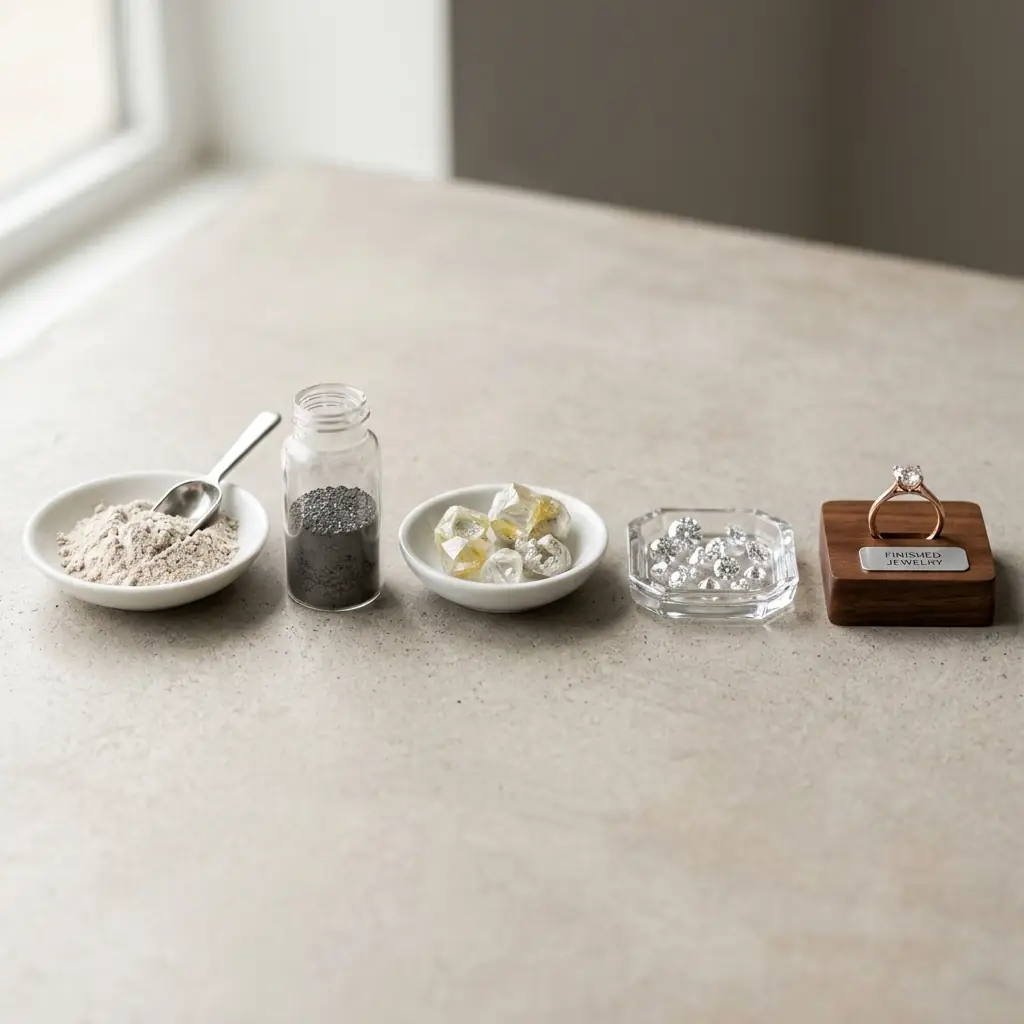
The method turns carbon from cremated remains into a rough crystal, which then undergoes cutting and polishing like any other diamond.
- Carbon extraction comes first, isolating usable material from the ash sample.
- Purification follows, refining the carbon to a workable grade.
- Crystal growth happens in a controlled chamber under sustained heat and pressure.
- Cutting and polishing shape the rough into a finished gem.
- Verification closes the loop, confirming the result before setting.
Each stage depends on the one before it. Therefore, delays early in the chain ripple through the whole schedule.
Key Factors That Shape the Timeline
Carbon Purity and Sample Size
Not every ash sample yields the same carbon volume. Some samples need extra processing to reach a suitable concentration. As a result, lower-yield samples can add days to the front end of the process.
Growth Chamber Scheduling
Growth runs on fixed cycles, and each crystal occupies chamber space for a set period. Moreover, facilities batch orders, so queue position affects timing. Booking earlier generally shortens the wait.
Cutting and Setting Complexity
A simple solitaire moves faster than an intricate halo or a multi-stone design. Similarly, bespoke CAD work adds design review time before the stone ever reaches a bench.
Comparison Table: Timeline Expectations by Stage
| Stage | Typical Duration | What Affects It |
| Carbon extraction | Days to a few weeks | Sample size and carbon yield |
| Purification | One to two weeks | Starting carbon quality |
| Crystal growth | Several weeks | Chamber cycle and queue position |
| Cutting and polishing | One to three weeks | Shape and facet complexity |
| Setting and finishing | One to two weeks | Design intricacy and metal choice |
Treat these as ranges, not guarantees. Every order carries its own variables, and honest providers share revised estimates as work progresses.
Why Custom and CAD Matter Here
A memorial diamond carries emotional weight that a stock setting cannot match. CAD design lets families translate a personal detail, such as a signature curve or a hidden engraving, into a wearable form before any metal is cut.
At Alpha Jewelry, clients often review a 3D render before approving the final piece, which keeps surprises out of a process that already asks for patience. Also, a considered setting protects the stone and honors the memory it represents.
FAQ
How long does the full ashes to diamond process take?
Most orders run from several weeks to a few months, depending on carbon yield, chamber scheduling, and design complexity.
Can any amount of ash work?
Providers typically need a modest sample, though requirements vary. Larger samples generally improve carbon recovery and reduce processing delays.
Does the diamond look different from a mined one?
No. The finished stone shares the same crystal structure and optical properties, so it reads as a diamond to the eye.
Can I choose the cut and shape?
Yes. Round, oval, cushion, and other cuts are usually available, and shape choice affects polishing time.
What happens if the carbon yield falls short?
Reputable providers notify you early and discuss options, which may include additional source material or a revised approach.
Conclusion
The ashes to diamond process rewards patience with permanence. As technology improves and providers communicate more transparently, timelines will likely tighten, but the core sequence of extraction, growth, and craftsmanship will remain the same.
Start Your Custom Jewelry Project
Alpha Jewelry manufactures custom and private label fine jewelry for brands, with low MOQ sampling, in-house 3D design, casting and stone setting. Send us your sketch, reference photo or CAD file and our team will reply within one business day.
- Request a quote: www.alphajewelry.com/contact/
- WhatsApp: wa.me/8618520595760
- Email: alpha_jewelry@163.com
Learn more: memorial diamond ashes-to-diamond service · OEM jewelry manufacturing service · our custom jewelry cooperation process.


