Blog
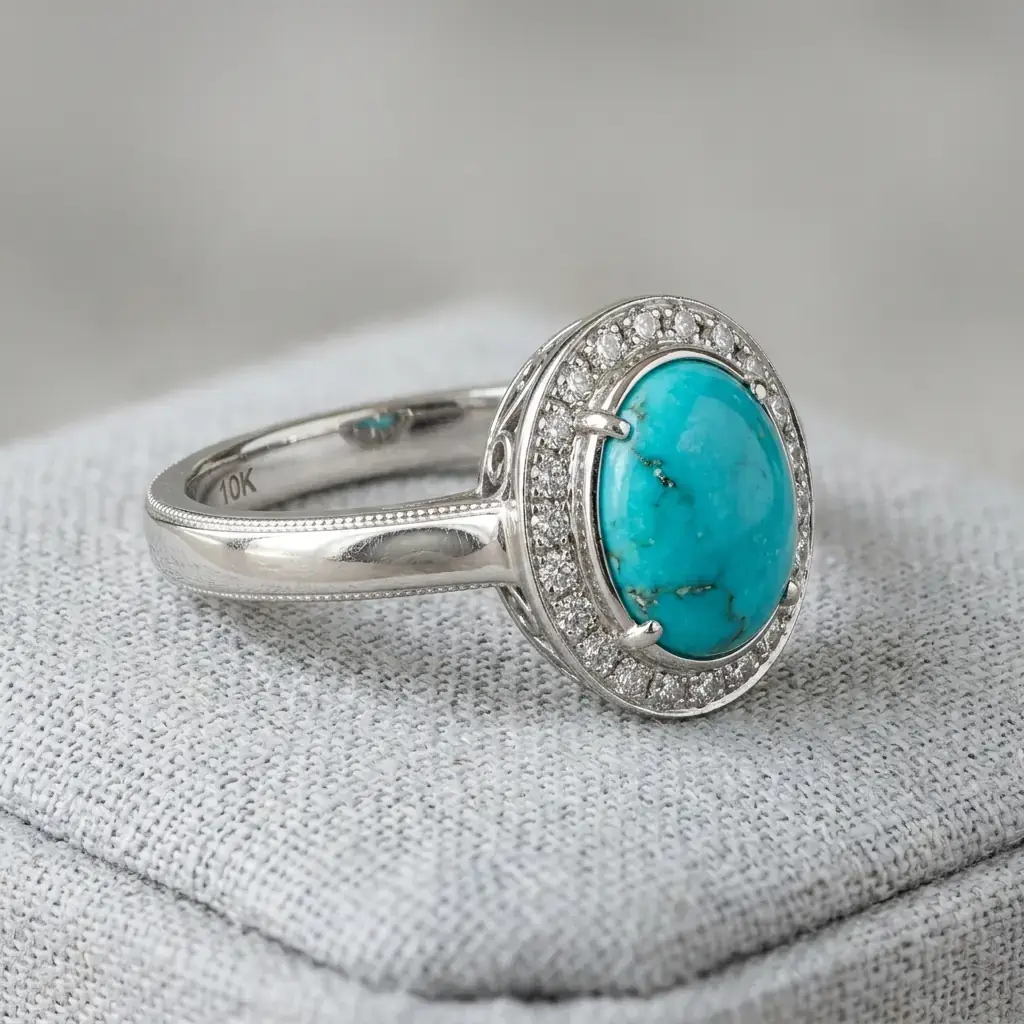
Custom 10K White Gold Turquoise Engagement Ring: A Bold Choice for 2026 Brides
Introduction
Moreover, brides today want rings that stand apart from the endless sea of diamond solitaires. The custom 10K white gold turquoise engagement ring offers that distinction, blending a vibrant blue gemstone with a durable, budget-conscious metal. This combination speaks directly to brides searching for something personal, colorful, and uniquely theirs.
Moreover, the trend toward colored gemstone engagement rings continues to grow as couples prioritize individuality over tradition. Turquoise, with its rich history and striking appearance, delivers both visual impact and meaningful symbolism. Therefore, understanding how to design and source this ring matters for anyone considering a non-traditional proposal.
Why the Custom 10K White Gold Turquoise Engagement Ring Is Trending
In addition, several market shifts explain the rising popularity of turquoise engagement rings in white gold settings.
- Color fatigue: Many brides express boredom with colorless stones and seek vibrant alternatives that reflect their personal style.
- Cost consciousness: Couples increasingly look for affordable options that still feel luxurious and well-crafted.
- Gemstone appreciation: Natural gemstones like turquoise offer character and uniqueness that mass-produced diamonds lack.
- Social media influence: Pinterest and Instagram showcase colorful engagement rings, driving demand for distinctive designs.
That said, the choice of 10K white gold adds another layer of appeal. This metal offers excellent durability at a more accessible price point than 14K or 18K gold. Consequently, brides can allocate more of their budget toward a high-quality turquoise stone or additional accent diamonds.
What Defines a Quality Turquoise Engagement Ring
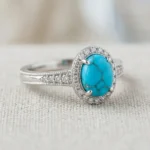
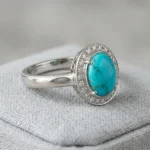
For example, a quality custom 10K white gold turquoise engagement ring begins with understanding the stone itself. Turquoise ranges from sky blue to greenish-blue, with the most prized specimens exhibiting a uniform, robin’s egg blue color without matrix lines.
Also, key characteristics to evaluate include:
- Stability: High-grade turquoise should be hard enough for everyday wear, though it remains softer than sapphires or diamonds.
- Color consistency: Look for even coloration without dark spots or excessive veining.
- Cut and shape: Cabochon cuts dominate turquoise jewelry because they showcase the stone’s color and any natural matrix beautifully.
- Treatment status: Most turquoise undergoes stabilization to improve durability; this process is standard and acceptable.
- Setting security: A bezel setting protects the stone better than prongs, given turquoise’s relative softness.
For this reason, brides should prioritize design integrity over size. A well-chosen stone in a secure setting will last for decades with proper care.
Best Approaches for Designing Your Custom Ring
Choosing the Right Turquoise Source
Not all turquoise comes from the same mines, and origin affects both color and price. Sleeping Beauty turquoise from Arizona, for example, offers the iconic solid blue color many brides desire. Meanwhile, Chinese turquoise often displays more matrix patterns and green tones.
Moreover, buyers should ask about stabilization. Stabilized turquoise resists oils and chemicals better than untreated stones, making it more suitable for daily ring wear. In fact, most reputable jewelers recommend stabilized stones for engagement rings.
Balancing Metal Strength and Aesthetics
Therefore, 10K white gold contains 41.7% gold, with the remainder composed of alloys like silver, copper, and zinc. This composition makes it harder and more scratch-resistant than higher-karat golds. For a ring worn daily, this durability proves valuable.
Also, 10K white gold appears slightly brighter and whiter than 14K white gold because of its higher alloy content. However, rhodium plating remains necessary to maintain that white finish over time. Brides should expect to re-plate their ring every few years to preserve its appearance.
Selecting a Complementary Setting
Furthermore, the setting style dramatically influences how turquoise looks and performs. Bezel settings surround the stone completely with metal, offering maximum protection. Halo settings, which encircle the turquoise with small diamonds or other stones, add sparkle and visual weight.
Likewise, the band width affects both comfort and style. A thinner band, around 1.5 to 2 millimeters, suits delicate hands and lets the turquoise dominate. Wider bands, from 2.5 to 3 millimeters, provide a more substantial feel and better suit active lifestyles.
Comparison Table
| Feature | Bezel Setting | Prong Setting |
|---|---|---|
| Stone protection | Maximum, edges fully covered | Moderate, edges exposed |
| Light entry | Limited by metal frame | Greater light exposure |
| Style impression | Modern, sleek, contemporary | Classic, traditional, airy |
| Maintenance needs | Lower, less frequent tightening | Higher, prongs need checking |
| Best for turquoise | Highly recommended | Not recommended for soft stones |
Why Custom Design and CAD Matter
Custom design transforms a simple idea into a precisely engineered ring. Computer-aided design (CAD) allows jewelers to create a digital model before any metal is cut, ensuring every angle and proportion meets expectations. This process proves especially valuable for colored gemstone rings where stone shape varies.
At Alpha Jewelry, clients collaborate with designers to refine every detail, from band thickness to stone placement. CAD technology enables quick revisions and visual confirmation before production begins. As a result, the final piece matches the original vision with minimal guesswork.
Furthermore, custom manufacturing supports one-piece creation, meaning no two rings need to be identical. This approach suits brides who want a ring that no one else owns.
FAQ
Q1: Is turquoise durable enough for an engagement ring?
A: Turquoise ranks 5 to 6 on the Mohs hardness scale, making it softer than quartz or diamond. With a protective bezel setting and reasonable care, it can withstand daily wear successfully.
Q2: How does 10K white gold compare to 14K white gold?
A: 10K white gold contains less gold and more alloy metals, making it harder and more affordable. However, it may cause reactions in people with metal sensitivities due to higher copper content.
Q3: Can I wear my turquoise ring every day?
A: Yes, but you should remove it during activities involving harsh chemicals, heavy cleaning, or high-impact sports. Turquoise is porous and can absorb oils and lotions.
Q4: What color turquoise is most valuable?
A: The most valuable turquoise displays a uniform, intense sky-blue color without matrix lines. Stones from the Sleeping Beauty mine in Arizona historically command premium prices.
Q5: Should I choose a lab-grown diamond or natural diamond for accent stones?
A: Both options work well for accent stones. Lab-grown diamonds offer identical appearance and durability at lower cost, while natural diamonds appeal to those prioritizing traditional sourcing.
Conclusion
The custom 10K white gold turquoise engagement ring represents a meaningful departure from convention, offering brides a piece that reflects their personality rather than following trends. As colored gemstones continue gaining acceptance in bridal jewelry, turquoise stands out for its historical significance and unmistakable color. Moreover, advances in CAD design and custom manufacturing make this distinctive ring accessible to anyone willing to explore beyond the traditional diamond solitaire.