
Blog
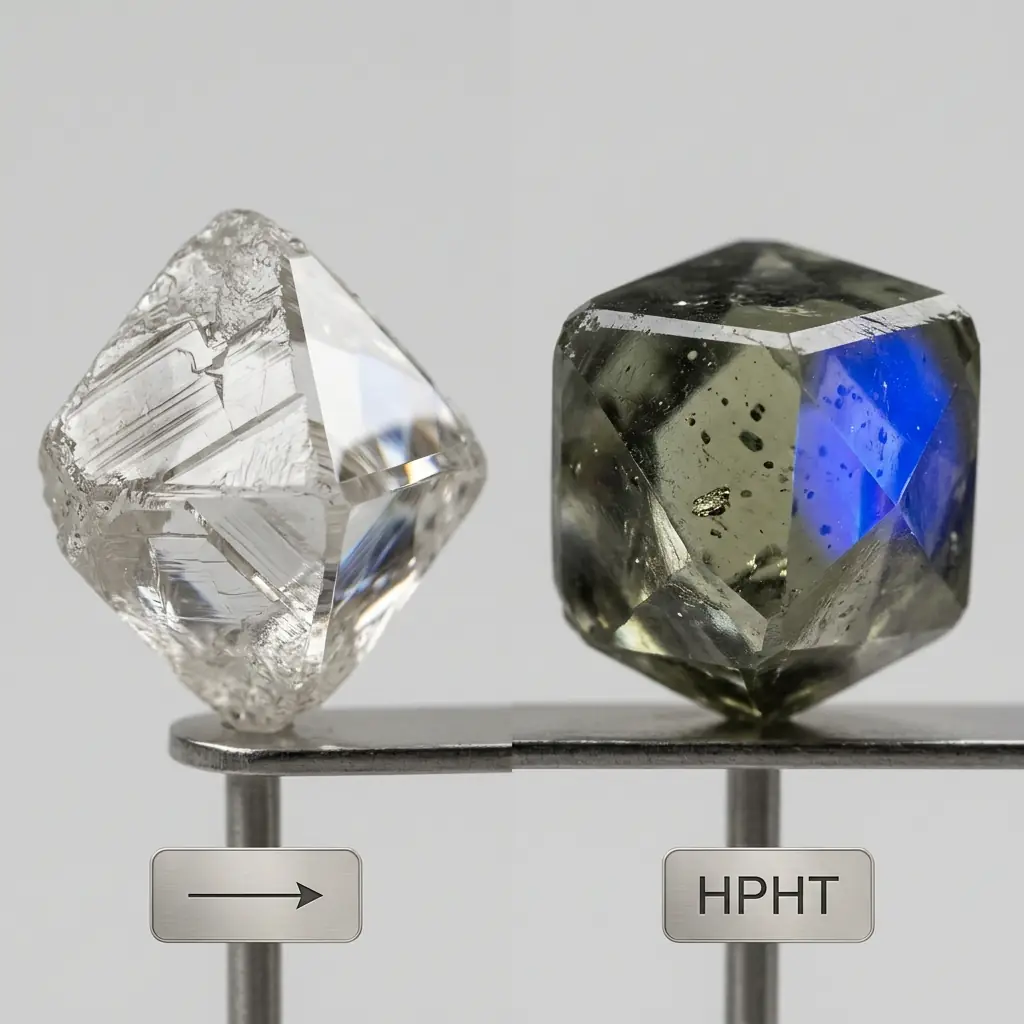
The difference between CVD and HPHT lab diamonds comes down to how they are grown. CVD diamonds form from gas in a vacuum chamber, while HPHT diamonds crystallize from carbon under high pressure and heat. Both produce real diamonds with the same optical and physical properties, but growth methods can affect color, clarity, and detection.
Key takeaways
- CVD and HPHT are two growth methods for lab diamonds; both yield genuine diamonds.
- HPHT mimics natural diamond formation with high pressure and temperature.
- CVD grows diamonds layer by layer from carbon-rich gas.
- Growth method can influence color, clarity, and detection features.
- Reputable grading reports help verify quality regardless of method.
What is the difference between CVD and HPHT lab diamonds?
CVD (Chemical Vapor Deposition) and HPHT (High Pressure High Temperature) are two distinct processes for growing diamonds in a lab. In CVD, a diamond seed is placed in a vacuum chamber and heated while carbon-rich gases are introduced. The carbon atoms deposit onto the seed, building the diamond layer by layer. In HPHT, a diamond seed is subjected to extreme pressure and temperature, mimicking the conditions under which natural diamonds form deep in the Earth. The carbon dissolves in a metal flux and crystallizes onto the seed. Both methods produce diamonds that are chemically, physically, and optically identical to natural diamonds. The main differences lie in the growth conditions, which can affect the diamond’s color, clarity, and the presence of certain impurities. Understanding these differences helps when sourcing lab grown diamonds for jewelry.
CVD vs HPHT lab diamond: which is better?
Neither CVD nor HPHT is inherently better; each has strengths. HPHT diamonds often have a slight blue or yellow tint due to nitrogen or boron impurities, but modern techniques can minimize this. CVD diamonds can sometimes have a brownish tint that may require post-growth treatment to improve color. HPHT is generally better at producing very colorless diamonds (D-F), while CVD is often used for larger stones. The choice depends on your priorities: if you need a specific color grade, HPHT might be more reliable; if you want larger sizes, CVD could be more suitable. Ultimately, the quality of the final diamond depends on the grower’s expertise and the grading report, not solely on the method. Always ask for a certificate from a reputable lab like IGI or GIA.
How can you tell if a lab diamond is CVD or HPHT?
Gemological laboratories can determine the growth method using advanced instruments. CVD diamonds often show specific fluorescence patterns under UV light and may have a layered growth structure visible under magnification. HPHT diamonds may contain metallic inclusions from the flux and exhibit distinct phosphorescence. Some CVD diamonds have a brownish hue that is reversed under certain lighting. For jewelers and consumers, the grading report from a lab such as IGI will typically state the growth method. If the report does not specify, the lab can usually provide that information upon request. Detection is important for transparency and to ensure the diamond meets your expectations.
Are CVD and HPHT diamonds both real diamonds?
Yes, both CVD and HPHT diamonds are real diamonds. They have the same crystal structure, hardness, and brilliance as natural diamonds. The only difference is their origin: they are grown in a laboratory rather than mined from the Earth. They are not simulants like cubic zirconia or moissanite. Because they are real diamonds, they require the same care and can be graded using the same 4Cs system (cut, color, clarity, carat) as mined diamonds. When shopping for lab grown diamond jewelry, you can expect the same sparkle and durability as natural diamonds, often at a lower cost.
What should you look for in a lab grown diamond supplier?
When sourcing lab grown diamonds, especially for wholesale or custom jewelry, consider these factors:
- Certification: Choose suppliers who provide grading reports from reputable labs like IGI or GIA. These reports verify the diamond’s quality and disclose the growth method.
- Consistency: Ensure the supplier can deliver consistent quality across multiple stones, which is crucial for production.
- Size and quantity: Confirm they can meet your volume and size requirements.
- Ethical practices: Verify that the supplier follows ethical and environmental standards.
- Communication: Work with a supplier who is responsive and transparent about their processes.
For custom projects, you may also need design support and reliable production timelines. A manufacturer that understands both lab diamond sourcing and jewelry production can streamline the process.
How does lab diamond quality compare to natural diamonds?
Lab grown diamonds are graded using the same criteria as natural diamonds: cut, color, clarity, and carat weight. The 4Cs system, developed by GIA, applies equally to both. In terms of physical properties, lab diamonds are identical to natural ones. The main difference is origin and price. Lab diamonds typically cost less because they can be produced in large quantities. However, natural diamonds may hold more value in the resale market, though this is not guaranteed. For jewelry, lab diamonds offer a responsible and affordable alternative without compromising on beauty or durability. When choosing, focus on the 4Cs and the grading report rather than the origin alone.
Comparison of CVD and HPHT Lab Diamond Growth Methods
| Attribute | CVD | HPHT |
|---|---|---|
| Growth process | Carbon gas deposits onto seed in vacuum chamber | Carbon crystallizes under high pressure and temperature |
| Typical color | May have brownish tint; can be treated | Often near-colorless; may have blue/yellow tint |
| Common sizes | Often larger stones | Small to medium stones |
| Detection features | Layered growth, fluorescence patterns | Metallic inclusions, phosphorescence |
Working With Alpha Jewelry
Alpha Jewelry is a precious-metal OEM jewelry factory in Panyu, Guangzhou, with more than 15 years of fine-jewelry manufacturing experience. You can start from a sketch, a reference image or an existing CAD file, and the CAD / 3D design is confirmed before production begins. Alpha Jewelry accepts OEM and private label orders from a single piece; branded packaging has an MOQ of 100 pieces. After CAD approval, rings and pendants usually ship in 7–14 days, while bracelets take about 20 days and bulk orders are quoted case by case. Lab-grown diamonds in DEF color and VVS–VS clarity come first; natural diamonds, moissanite, colored gemstones and customer-supplied stones can be set on request. An IGI report comes with diamond center stones over 0.5 ct and a GRA certificate with moissanite center stones; side stones and smaller center stones have no report. With OEM and private label production, your brand goes on the piece.
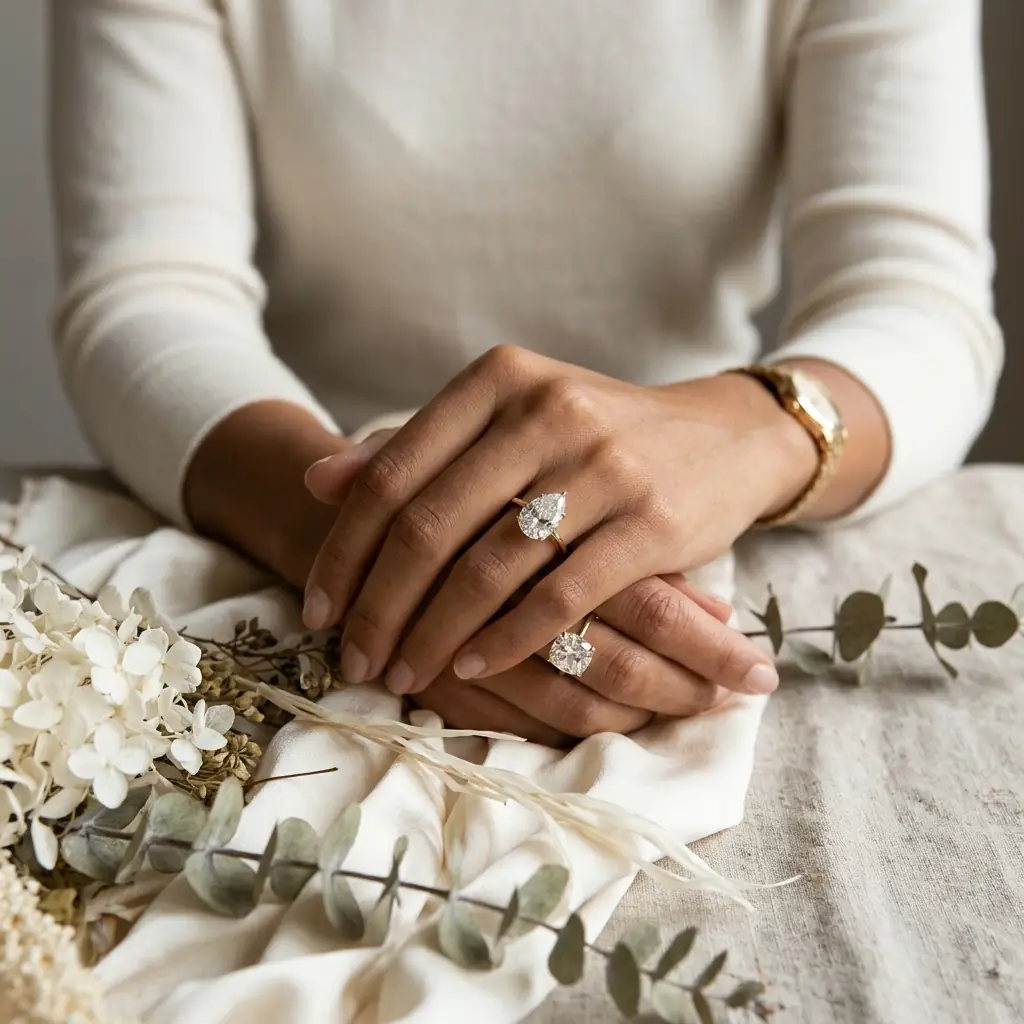
Examples from the catalog: Three-Stone Lab Diamond Engagement Ring Set in Solid Gold for women, Lab Grown Diamond Pear Cut Engagement Ring | Elegant Custom Design in 14K Gold.
FAQ
Is CVD better than HPHT?
Neither is universally better. HPHT is often preferred for colorless diamonds, while CVD is common for larger stones. Quality depends on the grower and grading, so always check the certificate.
Can a jeweler tell if a diamond is CVD or HPHT?
A trained gemologist can often identify the growth method using a microscope and UV light, but definitive identification requires advanced laboratory equipment. The grading report will usually state the method.
Are CVD diamonds cheaper than HPHT?
Prices vary based on size, quality, and market conditions. Generally, CVD and HPHT diamonds are similarly priced, but CVD may be more cost-effective for larger stones. Always compare quotes.
Do CVD and HPHT diamonds have the same brilliance?
Yes, both have the same optical properties as natural diamonds, including brilliance and fire. The cut quality determines the sparkle, not the growth method.
Which growth method is more common in jewelry?
Both are widely used. CVD is often used for larger center stones, while HPHT is common for smaller stones and melee. Availability depends on the supplier.
Sources
- Jewellery – Wikipedia
- Understanding the 4Cs of Diamond Quality | Diamond Factors | GIA 4Cs
- Diamond Care and Cleaning Guide
- Pliny the Elder, The Natural History, BOOK XXXIII. THE NATURAL HISTORY OF METALS., CHAP. 1. (1.)—METALS.
Related Reading
- Lab-Grown Diamond Anniversary Ring: Private Label Supplier Guide
- Lab-Grown Diamond Cocktail Ring: Manufacturer OEM Guide
- Why Lab-Grown Diamonds Are Becoming the New Luxury Standard in Fine Jewelry
Start Your Custom Jewelry Project
Alpha Jewelry manufactures custom and private label fine jewelry for brands, with orders from one piece and in-house 3D design. Send us your sketch, reference photo or CAD file to request a quote.
- Request a quote: www.alphajewelry.com/contact/
- WhatsApp: wa.me/8618520595760
- Email: alpha_jewelry@163.com
Learn more: custom jewelry packaging · lab grown diamond jewelry · custom tennis bracelet.


