
Blog
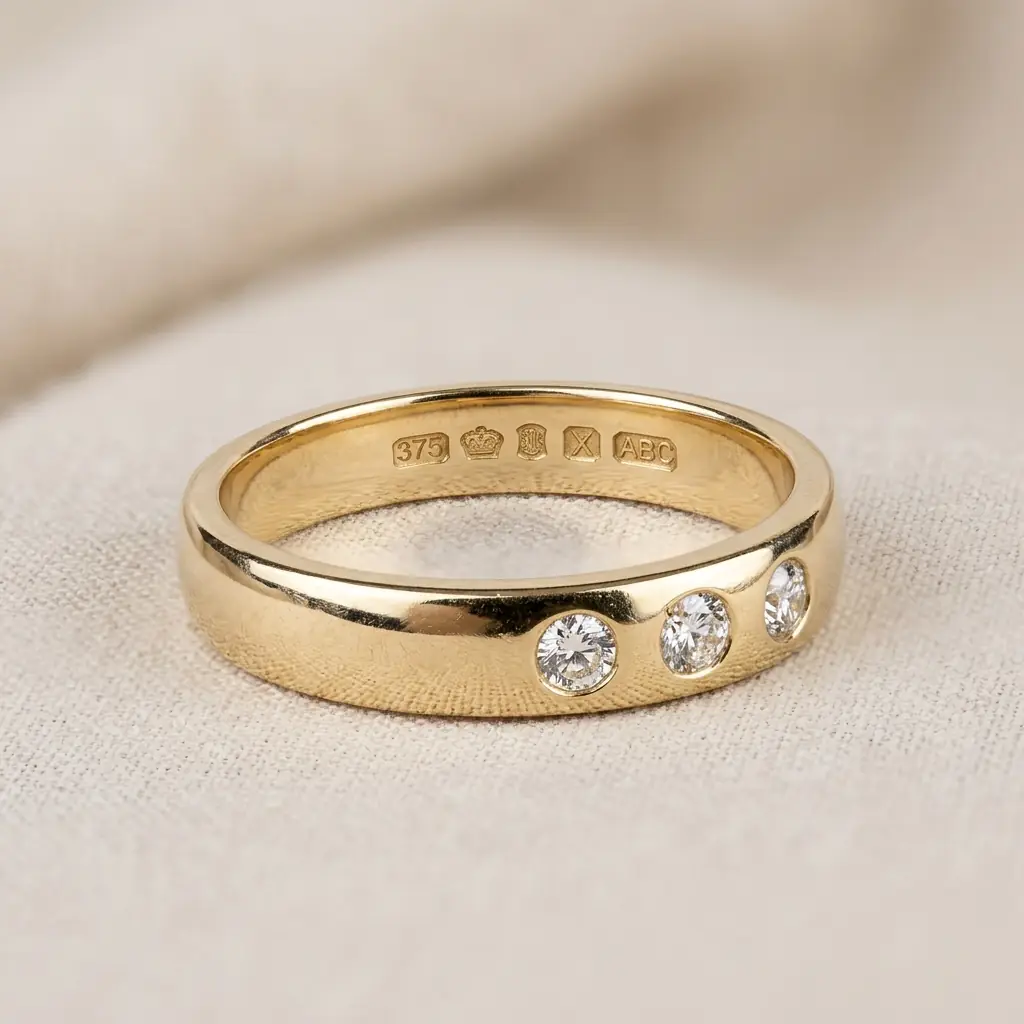
Yes, 9k gold is real gold. The “9k” means 9 parts of pure gold out of 24, so the metal is 37.5% gold, usually stamped 375. The rest is alloy, added for strength and color. It is a genuine gold alloy, not a coating or a fake, though it holds less gold than 14k or 18k.
Key takeaways
- 9k gold contains 37.5% pure gold, marked 375 or 9ct
- It is a real gold alloy, not gold plating or a simulant
- Lower gold content means lower material cost than 14k or 18k
- More alloy makes it harder and more scratch-resistant
- It may tarnish and is not ideal for high-end fine jewelry lines
What does 9k gold mean?
Karatage is a purity measure out of 24 parts. Pure gold is 24k. Divide 9 by 24 and you get 0.375, which is 37.5% gold. That is where the 375 stamp comes from, and it is the mark you will see inside a ring band or on a clasp.
Yellow 9k leans on copper and zinc. Rose 9k uses more copper. White 9k is alloyed with white metals and normally finished with rhodium plating for a bright surface.
So the answer to “is 9k gold real gold” is yes. It is a genuine gold alloy with a legal purity standard behind the stamp. What it is not is pure gold, and it is not the same product as 14k or 18k.
One practical point for buyers: karat stamps are a legal declaration in most markets. If a piece is stamped 375, the alloy should test at 37.5% gold within the allowed tolerance. Ask your supplier what tolerance they work to and how they verify it.
Is 9k gold solid gold or plated?
These are two different things, and mixing them up causes most of the confusion around 9k.
Solid gold means the metal is gold alloy all the way through, not a base metal with a gold layer on top. A 9k ring is solid in that sense. If you cut it in half, the inside is the same alloy as the outside.
What 9k is not is fine gold. Some shoppers hear “solid gold” and picture 24k. That is a different product with different handling needs, because pure gold is soft and deforms easily.
When you evaluate a supplier, ask directly: is the item solid 9k alloy or plated? Get it in writing on the spec sheet, along with the stamp and the alloy composition. A 9k piece that is honestly made and stamped is a real gold product. A plated piece sold as 9k is a misdescription, and that is the risk worth guarding against.
9k vs 14k gold: how do they compare?
The main difference is gold content and what that does to cost, durability and color.
- Purity: 9k is 37.5% gold, 14k is 58.5%.
- Cost: because metal cost tracks gold content, 9k is the cheaper option at the same weight. That gap moves with the gold price.
- Hardness: 9k has more alloy, so it resists scratches and dents better. 14k is softer but still durable for daily wear.
- Color: 14k yellow reads warmer and richer. 9k yellow can look slightly paler or more brassy, and the difference is visible side by side.
- Tarnish: 9k is more prone to tarnish and, in some skin chemistries, to a greenish mark, because of the higher base-metal share.
- Resale: 14k and 18k hold melt value better. 9k recovers less because there is less gold to recover.
For a fashion line at a sharp price, 9k works. For bridal and heirloom pieces, most brands stay at 14k or above.
Is 9k gold good quality?
Quality depends on how the piece is made, not on karat alone. A well-cast, well-finished 9k ring with tight prongs and clean polishing is a good product. A poorly made 14k ring is not.
Where 9k has real advantages: it is harder, so thin bands and delicate settings hold up better; it costs less, so you can hit a lower retail price; and it casts well in small, detailed shapes.
Where it falls short: it can tarnish, it may react with some skin types, it looks less rich in yellow, and it carries less intrinsic value. Customers who expect a piece to hold value will be disappointed.
For a jewelry brand, the honest framing is to sell 9k as a durable, affordable real-gold option and price it accordingly. Do not present it as equivalent to 14k. If you need consistent alloy and stamping across production runs, work with a factory that controls its own casting and finishing. Pieces are made in solid 9K–22K yellow, white or rose gold or in Pt950 platinum.
Ask for samples in the colors you plan to sell and wear-test them for a few weeks before committing to a full run.
What should brands check before ordering 9k gold jewelry wholesale?
Run through this list before you place a wholesale order.
- Confirm the alloy and stamp. Get the composition and the 375 stamp confirmed on the spec sheet, not just in conversation.
- Ask about plating. White 9k is usually rhodium plated. Ask how thick and how it is finished, because plating wear is the first complaint you will hear.
- Test the color. Order color samples in yellow, rose and white. Photograph them under daylight and store lighting.
- Check the findings. Clasps, jump rings and ear wires should match the karat and color of the body, or the piece will look mismatched.
- Set your tolerances. Agree on weight tolerance per piece and on what happens with shortfalls.
- Plan your labeling. In markets that require a purity mark, make sure the stamp and any hangtag match the actual alloy.
- Order a production sample. Approve a golden sample before bulk, and keep it as the reference for the run.
A factory that already produces 9k for other brands will have the alloy and stamping worked out. OEM and private label orders start at one piece (MOQ 1), and custom logo packaging starts at 100 pieces.
Put the approved sample and spec sheet in writing so both sides are working from the same standard.
Who should buy 9k gold jewelry?
9k suits some buyers much better than others.
Good fit: fashion and bridge brands selling at accessible price points; designers making thin, detailed or stacking pieces where hardness helps; markets where 9k is a familiar, accepted standard; and couples who want real gold bands at a lower budget.
Poor fit: bridal lines positioned as heirloom; brands whose customers ask about gold weight and resale; and any line where the yellow color must match 14k or 18k pieces in the same collection.
For couples ordering custom rings, 9k is a reasonable choice for a first set or a travel ring, as long as both partners understand the trade-off in gold content. Couples can also order custom wedding and engagement rings, including a setting for a diamond they already own.
Be clear in your product copy. Say “9k gold, 37.5% purity, stamped 375” and explain the durability benefit. Customers who feel informed rarely complain. Customers who assumed they were buying 14k always do.
9k gold compared with common jewelry karats
| Karat | Gold content | Typical stamp | Best for |
|---|---|---|---|
| 9k | 37.5% | 375 or 9ct | Fashion lines, thin bands, lower price points |
| 10k | 41.7% | 417 or 10k | US mass market, durable everyday pieces |
| 14k | 58.5% | 585 or 14k | Bridal, everyday fine jewelry, resale value |
| 18k | 75.0% | 750 or 18k | High fine jewelry, rich color, softer metal |
| 22k | 91.7% | 916 or 22k | Cultural and investment pieces, soft and easily dented |
Working With Alpha Jewelry
Alpha Jewelry is an OEM fine-jewelry factory in Panyu, Guangzhou, with 15+ years of manufacturing experience; it is a factory, not a retail brand. You can start from a sketch, a reference image or an existing CAD file, and the CAD / 3D design is confirmed before production begins. Rings and pendants typically ship 7–14 days after CAD approval; other categories and bulk orders are quoted individually. OEM and private label pieces carry your brand, not the factory’s.

FAQ
Is 9ct gold real gold?
Yes. 9ct and 9k mean the same thing: 9 parts pure gold out of 24, or 37.5%. It is a genuine gold alloy, normally stamped 375 or 9ct. It is real gold, just at a lower purity than 14k or 18k.
Is 9k gold solid gold?
It is solid in the sense that the whole piece is the same alloy, not a gold layer over a base metal. It is not fine gold, though. Solid 9k means 37.5% gold throughout. Always confirm on the spec sheet that a piece is solid alloy rather than plated, and check the stamp.
Is 9ct yellow gold real gold?
Yes. Yellow 9ct gold is a real gold alloy, colored with copper and zinc in the mix. The yellow can look slightly paler than 14k because there is less gold in the alloy. Compare samples side by side under daylight before you commit to a color for a full collection.
Does 9k gold tarnish?
It can. Regular cleaning and proper storage help. White 9k is usually rhodium plated, and that plating wears over time and needs re-finishing.
Is 9k gold good quality for jewelry?
It can be. 9k is harder and more scratch-resistant than higher karats, which suits thin bands and detailed settings. Quality depends on casting, finishing and stamping accuracy. It is a good fit for affordable fashion lines and a poor fit for bridal pieces sold on gold value and resale.
How much gold is in 9k gold?
9k gold is 37.5% pure gold by weight. That is 9 parts out of 24. This is why 9k costs less per gram than 14k, which contains 58.5% gold.
Sources
- 92.7 Big FM – Wikipedia
- Communion (Years & Years album) – Wikipedia
- Great Recession in the United States – Wikipedia
- Kuwait International Airport – Wikipedia
Related Reading
- 10K Gold Jewelry Manufacturer — Wholesale Guide
- Earring Manufacturer Guide: OEM Studs & Huggies in 9K–18K Gold
- Navigating Gold Price Surges: Strategies for Custom Jewelry Manufacturers
Start Your Custom Jewelry Project
Alpha Jewelry manufactures custom and private label fine jewelry for brands, with orders from one piece and in-house 3D design. Send us your sketch, reference photo or CAD file to request a quote.
- Request a quote: www.alphajewelry.com/contact/
- WhatsApp: wa.me/8618520595760
- Email: alpha_jewelry@163.com
Learn more: custom jewelry packaging · lab grown diamond jewelry · custom tennis bracelet.


